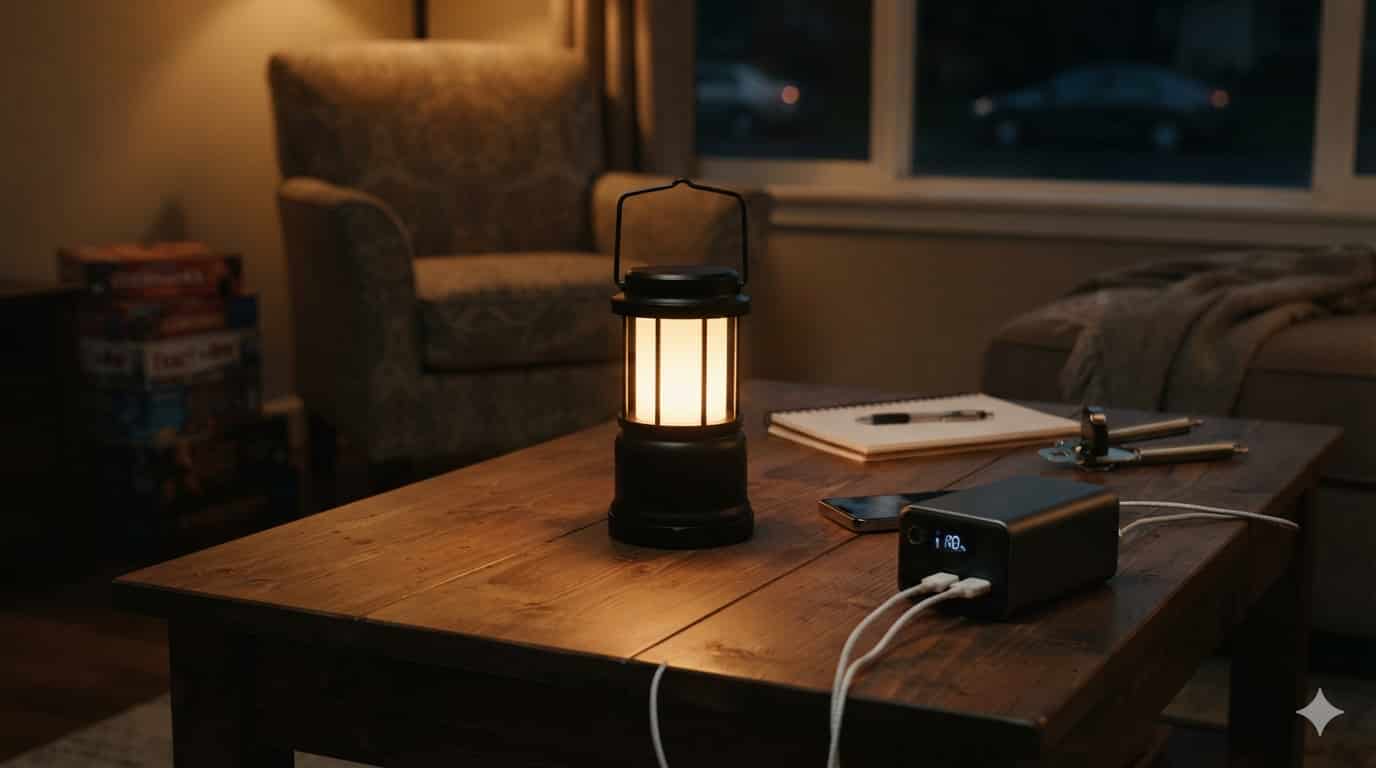
Stocking dependable power outage emergency kit essentials is critical when severe storms, winter freezes, or grid failures suddenly leave your home without electricity and heating. Modern society relies entirely on continuous electrical power for lighting, food refrigeration, cellular communication, and municipal water pressure. When a transformer blows or ice storms topple regional transmission towers, ordinary households plunge into total chaos within hours.
While most families scramble to find a lone candle after the lights go out, organizing comprehensive power outage emergency kit essentials ensures you maintain illumination, food safety, and critical communication lines. Open flame candles present catastrophic fire hazards in dark, chaotic homes, and depending on a dying smartphone as a flashlight depletes your only emergency communication tool in under two hours.
Whether you are preparing for seasonal winter blizzards, summer rolling blackouts, or unexpected infrastructure disruptions, here are the 7 proven items to keep your home functional and secure until the power returns.
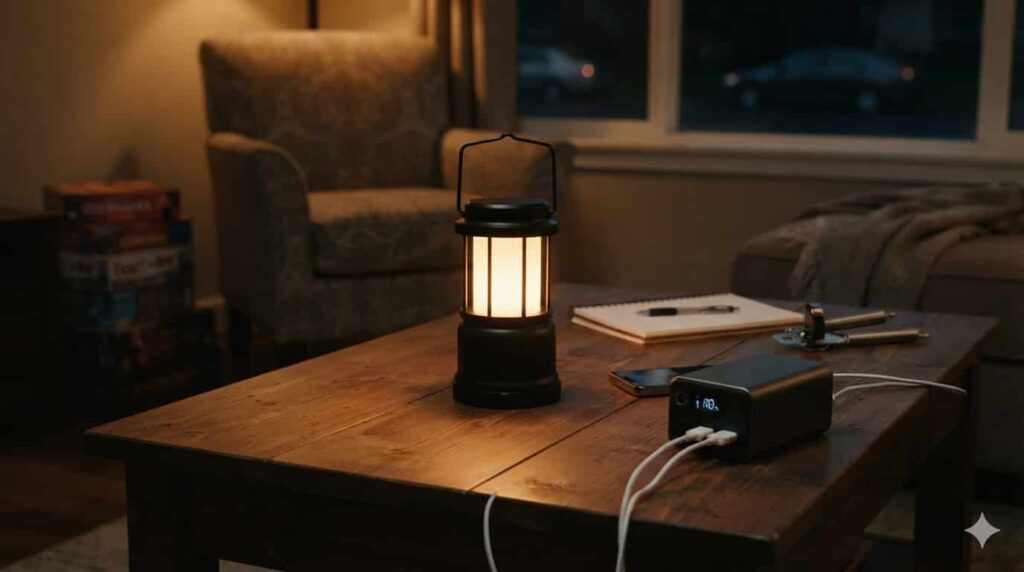
Why You Need Power Outage Emergency Kit Essentials
Many homeowners underestimate their power outage emergency kit essentials until dead smartphone batteries and spoiled refrigerator groceries create an avoidable emergency.
When the municipal electrical grid fails, three distinct household crises immediately unfold:
- Total Communication Blindness: Cell phones drain rapidly, Wi-Fi routers shut down, and local cell towers become congested, cutting off vital weather alerts and family contact.
- Food Spoilage and Financial Loss: A standard home refrigerator maintains safe food temperatures for only 4 hours, while a full freezer lasts roughly 48 hours without active intervention.
- Hypothermia or Heat Exhaustion: During extreme sub-zero winter storms or 100°F heatwaves, losing HVAC climate control turns an insulated house into an unbearable, life-threatening structure.
Organizing calibrated power outage emergency kit essentials guarantees that your household remains completely autonomous, calm, and protected through extended dark periods.
7 Proven Power Outage Emergency Kit Essentials for Grid Security
1. Rechargeable High-Lumen LED Lanterns and Headlamps
As the foundational layer among power outage emergency kit essentials, hands-free headlamps and ambient LED lanterns eliminate hazardous open candle flames. Headlamps direct focused illumination everywhere you look, leaving both hands free to handle circuit breakers, medical supplies, or children.
- Target Output: 300 to 800 lumens for room-filling lanterns; 150 lumens for wearable headlamps.
- Power Source: Built-in USB rechargeable lithium batteries paired with backup AAA alkaline battery slots (dual-fuel capability).
- The Candle Warning: Open wax candles cause thousands of residential structure fires during seasonal blackouts; eliminate open flames entirely from your emergency plan.
(Affiliate Tip: Ideal spot to recommend collapsible USB rechargeable LED camping lanterns).
2. Portable Power Stations and Lithium Backup Banks
Incorporating lithium power banks elevates your power outage emergency kit essentials to keep medical devices and phones charged for days. A compact 20,000mAh pocket battery recharges smartphones multiple times, while a 300Wh to 500Wh portable power station can run a CPAP machine, mini-fridge, or home router.
- Recommended Capacity:
- Tier 1 (Personal): 20,000mAh USB-C Power Delivery (PD) bank for phones and headlamps.
- Tier 2 (Household): 300Wh–500Wh lithium iron phosphate (LiFePO4) solar generator for laptops and medical gear.
- Recharge Strategy: Pair your power station with a portable 100-watt foldable solar panel to generate infinite clean electricity from your balcony or yard.
(Affiliate Tip: Great spot to link to portable power stations like Jackery, EcoFlow, or Anker).
3. Emergency Hand-Crank NOAA Weather Radio
Adding an NOAA weather radio ensures your power outage emergency kit essentials deliver vital civil defense updates when cellular towers go down. During widespread hurricanes or ice storms, local cellular networks often collapse due to physical damage or overload.
- Key Features to Look For:
- Public alert certification (SAME alerts).
- Multiple charging inputs: Solar panel, hand-crank dynamo, and internal rechargeable battery.
- Built-in emergency siren and secondary reading light.
- Standard 5V USB output port to emergency-charge a dead phone.
4. Shelf-Stable No-Cook Food Rations and Manual Can Opener
Curating calorie-dense meals reinforces your power outage emergency kit essentials without depending on an electric microwave or stove. If your home features an electric cooktop, you cannot boil water or warm soup without outdoor camping stoves.
- Best Food Options:
- Pull-tab canned proteins (sardines, chicken, tuna).
- High-calorie emergency food ration bars and nutrient-dense nut butters.
- Freeze-dried meals that rehydrate with room-temperature water.
- Essential Tool: Always tape a heavy-duty manual stainless-steel can opener directly to your emergency food box.
Maintaining physical endurance through consistent achieving cardiorespiratory fitness keeps your energy high and prevents physical exhaustion when lifting heavy emergency supplies during storms.
5. Emergency Thermal Blankets and Portable Heat Sources
Packed mylar space sheets provide life-saving warmth inside your power outage emergency kit essentials during freezing winter blackouts. Mylar space blankets reflect up to 90% of your body’s radiated thermal heat back toward your core.
- Winter Gear Checklist:
- Heavy-duty reinforced mylar bivvy bags (more durable than flimsy foil sheets).
- Sub-zero synthetic sleeping bags.
- Air-activated chemical hand and foot warmers (which provide up to 10 hours of soothing heat).
- Indoor-safe propane heaters (such as Mr. Heater Buddy) equipped with automatic low-oxygen shutoff sensors.
6. Battery-Operated Carbon Monoxide (CO) Alarms
Never operate outdoor generators, camp stoves, or charcoal grills indoors; combustion byproducts release colorless, odorless carbon monoxide that is instantly fatal. Keeping a standalone battery-powered CO detector in your living space protects your family from accidental poisoning.
- Safety Mandate: Never run a fuel generator closer than 20 feet to any window, door, or vent.
Managing household panic during sudden infrastructure failures is paramount; practicing calming routines like yoga for mental health training resets elevated adrenaline and sharpens practical decision-making during crises.
7. Cash Reserves and Hardcopy Family Contact Documents
Credit card readers, ATM networks, and electronic payment apps fail instantaneously when the power grid goes down. Storing $100 to
200insmallbills(200insmallbills(1, $5, and $10) inside a waterproof zip pouch ensures you can purchase ice, fuel, or emergency hardware from local stores operating on cash-only cash boxes.
- Paper Backup: Keep a laminated list of emergency family phone numbers, medical prescriptions, and insurance policy numbers.
Systemic Safety: How Power Outage Emergency Kit Essentials Prevent Hazards
The real purpose of standardized power outage emergency kit essentials is mitigating carbon monoxide risks and domestic fire hazards during sudden blackout events.
| Essential Gear | Primary Function | Power Source | Blackout Value |
| LED Headlamp | Hands-free task lighting | USB Rechargeable / AAA | Eliminates fire risk |
| Portable Power Station | Runs phones & medical gear | LiFePO4 Battery / Solar | Preserves communication |
| Hand-Crank Radio | Weather alerts & news | Dynamo Crank / Solar | Works when cell towers fail |
| Manual Can Opener | Accessing canned food | Pure Mechanical | Zero power dependency |
| Mylar Bivvy Sack | Hypothermia prevention | Traps Body Heat | Crucial for winter outages |
| Battery CO Detector | Prevents lethal gas poisoning | 9V / AA Alkaline | Critical life safety |
Maintenance and Routine Readiness Drills
Conducting an annual inspection of your power outage emergency kit essentials guarantees that rechargeable battery cells remain topped off and ready for immediate deployment.
Follow these three basic readiness habits:
- The 6-Month Top-Off: Plug in your portable power stations and rechargeable lanterns twice a year (coinciding with daylight savings) to keep lithium cells at 80%–90% capacity.
- Store in One Dedicated Toter: Keep all your blackout gear packed inside a heavy-duty waterproof plastic storage tote labeled clearly with reflective tape.
- Keep Refrigerator Doors Closed: Remind all household members that every time a refrigerator door is opened during a blackout, valuable cold air escapes immediately.
Investing in these reliable power outage emergency kit essentials gives your family complete domestic resilience against any unforeseen infrastructure failure.
Connect With Us & Share Your Progress
For practical emergency preparedness guides, family resilience tips, and healthy lifestyle routines, join our growing digital community:
- Follow our visual emergency preparedness boards on FitKiter on Pinterest
- Join our community resilience discussions on FitKiter on Facebook