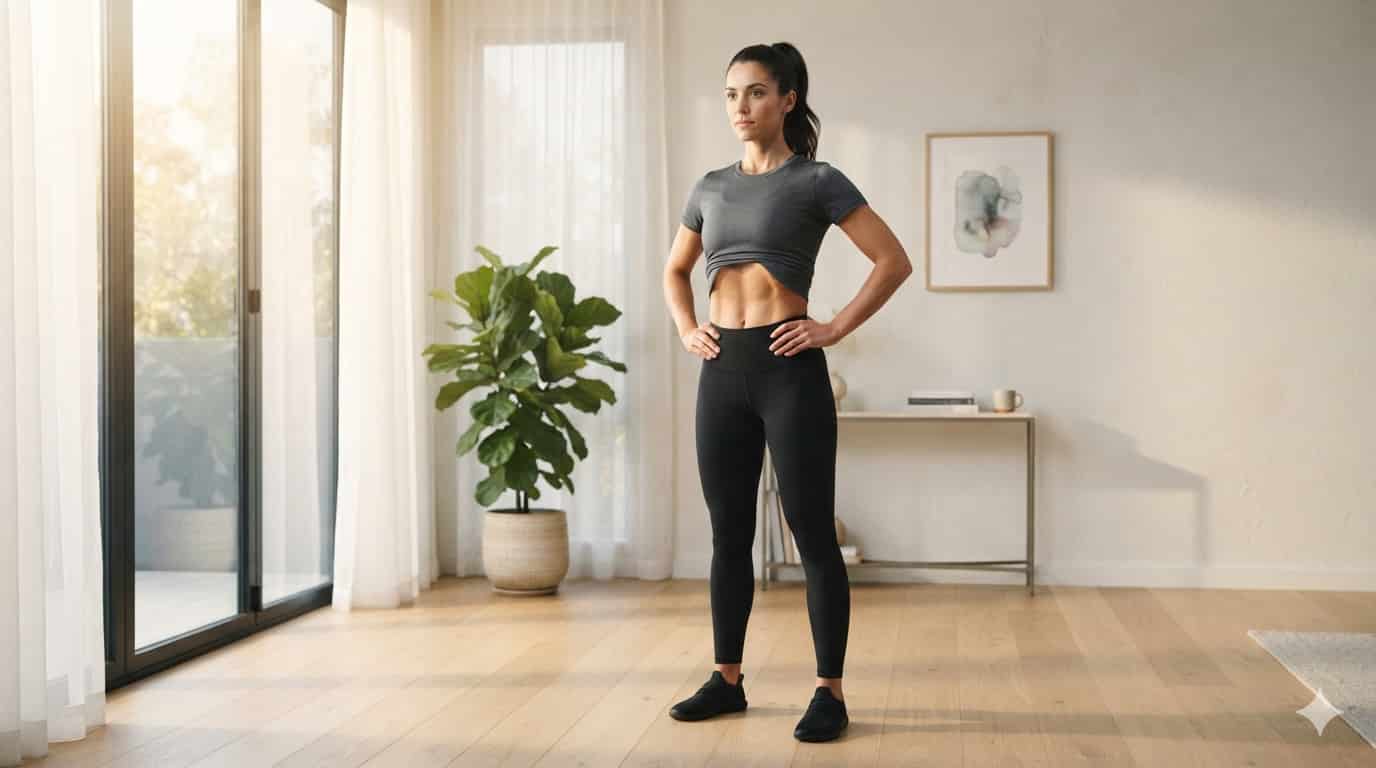
Practicing the targeted stomach vacuum exercise for smaller waistline results is one of the most effective ways to strengthen the deep transverse abdominis, cinch your midsection, and fix anterior pelvic tilt. Traditional ab workouts typically focus on crunches, sit-ups, and leg raises, which primarily hypertrophy the superficial rectus abdominis (the visible six-pack). However, heavy crunches do virtually nothing to pull your abdominal wall inward.
While traditional abdominal crunches only build the superficial six-pack muscles, executing the classic stomach vacuum exercise for smaller waistline contouring trains your internal muscular corset to pull your stomach flat. The transverse abdominis (TVA) acts as your body’s natural weight belt, wrapping horizontally around your internal organs and spine. When this deep muscle becomes weak and stretched from prolonged sitting, your belly protrudes forward even if you have low body fat.
Whether you want to achieve the classic Golden Era bodybuilding V-taper, recover deep core activation postpartum, or simply stop your lower belly from bulging over your waistband, here are the 7 proven steps to master stomach vacuums safely at home.
Why You Need the Stomach Vacuum Exercise for Smaller Waistline Control
Many fitness enthusiasts perform hundreds of sit-ups without seeing a narrower waist, but utilizing the stomach vacuum exercise for smaller waistline definition directly contracts the transverse abdominis beneath the rectus abdominis.
Regularly engaging this deep, involuntary core muscle unlocks three critical functional and aesthetic adaptations:
- Natural Waist Cinching: Isometric transverse contractions pull your internal abdominal wall closer to the spine, physically narrowing your waist circumference over time.
- Decompression of the Lumbar Spine: The transverse abdominis attaches directly to the thoracolumbar fascia; strengthening it creates hydraulic intra-abdominal pressure that unloads strain from your lumbar vertebrae.
- Visceral Organ Support: A toned abdominal wall keeps your stomach, liver, and intestines properly positioned, preventing digestive sagging and evening bloating.
Adopting the daily stomach vacuum exercise for smaller waistline management ensures you build real postural core stability without repetitive spinal flexion.
7 Proven Stomach Vacuum Exercise for Smaller Waistline Steps for Core Control
1. The Supine Lying Progression for Beginners
Starting the stomach vacuum exercise for smaller waistline training lying flat on your back uses gravity to assist in drawing your navel toward your spine. Lying down eliminates the need for your core to fight gravity, making it the easiest position to master mind-muscle connection with the deep TVA.
- Position: Lie flat on your back on a firm yoga mat with knees bent at 90 degrees and feet flat on the floor.
- Hand Placement: Rest your fingertips lightly on your lower belly just inside your hip bones to physically feel the deep muscle contract.
- Duration: 3 sets of 15-second holds.
2. Complete Exhalation Before Contraction
The critical mechanical cue during the stomach vacuum exercise for smaller waistline results is expelling 100% of the air from your lungs before pulling your belly inward. Attempting to vacuum your stomach while your lungs are full of air creates downward diaphragmatic pressure that prevents the abdominal wall from recessing beneath the ribcage.
- Exhalation Cue:
- Take a slow, deep breath in through your nose to expand your lower ribs.
- Exhale forcefully through pursed lips until you feel completely empty, as if blowing out 50 birthday candles.
- Once empty, do not inhale; immediately pull your belly button backward toward your spine and upward toward your heart.
3. The 15-to-20 Second Isometric Hold
Sustaining the stomach vacuum exercise for smaller waistline contraction for fifteen seconds trains the slow-twitch endurance fibers of the inner abdominal wall. The transverse abdominis is predominantly composed of fatigue-resistant Type-I muscle fibers that respond best to time under isometric tension rather than rapid kinetic reps.
- Target Time: 15 seconds for beginners; progress to 30 or 45 seconds as your endurance increases.
- Visual Check: Look down at your torso; your stomach should appear deeply hollowed out, creating a visible cavity beneath your lower ribs.
4. Controlled Shallow Breathing During the Hold
Learning to take micro-breaths during the stomach vacuum exercise for smaller waistline mastery prevents oxygen deprivation while maintaining core tension. Beginners often hold their breath completely, leading to dizziness, elevated blood pressure, and premature set termination.
- The Micro-Breath Technique: Once the vacuum is locked in place, take tiny, shallow sips of air into the top of your chest without letting your lower abdominal wall release forward.
- Throat Relaxation: Keep your neck, jaw, and shoulders relaxed; do not tense your face or clench your teeth.
Pairing functional core control with cardiovascular stamina through achieving cardiorespiratory fitness keeps your aerobic baseline high, enhancing total-body fat burning to reveal your narrowed midsection.
5. The Quadruped All-Fours Position (Gravity Resistance)
Progressing your stomach vacuum exercise for smaller waistline execution onto your hands and knees forces your deep core to contract directly against downward gravitational resistance. In this position, gravity naturally pulls your viscera downward toward the floor, demanding double the muscular effort to pull your navel upward.
- Position: Hands directly under shoulders, knees directly under hips, flat neutral spine.
- Execution: Exhale all air, then pull your belly button vertically upward toward the ceiling against gravity.
- Form Red Flag: Do not let your upper back round like a cat; keep your spine completely neutral.
6. Standing and Seated Functional Integration
Once you can hold a 30-second vacuum on all fours, practicing the vacuum while standing tall or sitting in an office chair translates directly into everyday posture. Combining focused core activation with mindful yoga for mental health training reduces sympathetic stress and trains you to maintain a light, passive core engagement all day.
- Workplace Habit: Practice a 20-second vacuum while stopped at red lights during your commute or while reading emails at your desk.
7. Gentle Release and Controlled Inhalation
Never snap your stomach outward aggressively at the end of a hold. Conclude each repetition by releasing the contraction smoothly over three seconds, then taking a deep, slow diaphragmatic inhale through your nose to re-expand your ribcage before beginning the next round.
Biomechanics: How the Stomach Vacuum Exercise for Smaller Waistline Works Internally
The biological brilliance of consistent stomach vacuum exercise for smaller waistline practice is tightening the fascia of the abdominal wall, which reduces intra-abdominal protrusion.
| Core Exercise | Primary Muscle Targeted | Effect on Waist Width | Impact on Lumbar Spine |
| Traditional Crunches | Rectus Abdominis | Can thicken waist (Lateral growth) | High flexion stress |
| Heavy Weighted Side Bends | External Obliques | Widens waist noticeably | Uneven lateral shear |
| Stomach Vacuum | Transverse Abdominis (TVA) | Narrows waist (Cinched corset) | Decompresses lumbar discs |
| Standard Plank | TVA & Rectus Abdominis | Moderate cinching | Low (if form is strict) |
Morning Timing and Progression Protocol
Executing the stomach vacuum exercise for smaller waistline shaping first thing in the morning on an empty stomach yields the most pronounced neuromuscular recruitment.
Follow this simple 4-week progression schedule:
- Timing: First thing upon waking, immediately after using the bathroom and before drinking large volumes of water or eating breakfast.
- Week 1 (Lying Supine): 3 sets of 15 seconds (Rest 45 seconds between sets).
- Week 2 (All-Fours Quadruped): 3 sets of 20 seconds.
- Week 3 (Seated in Chair): 3 sets of 25 seconds.
- Week 4 (Standing Tall): 4 sets of 30 seconds.
Committing daily to the stomach vacuum exercise for smaller waistline refinement gives you the classic V-taper aesthetic and robust lumbar spine protection without painful spinal flexion.
Connect With Us & Share Your Progress
For practical core shaping guides, posture workouts, and active wellness routines, join our growing digital fitness community:
- Follow our visual exercise routines on FitKiter on Pinterest
- Join our community fitness discussions on FitKiter on Facebook