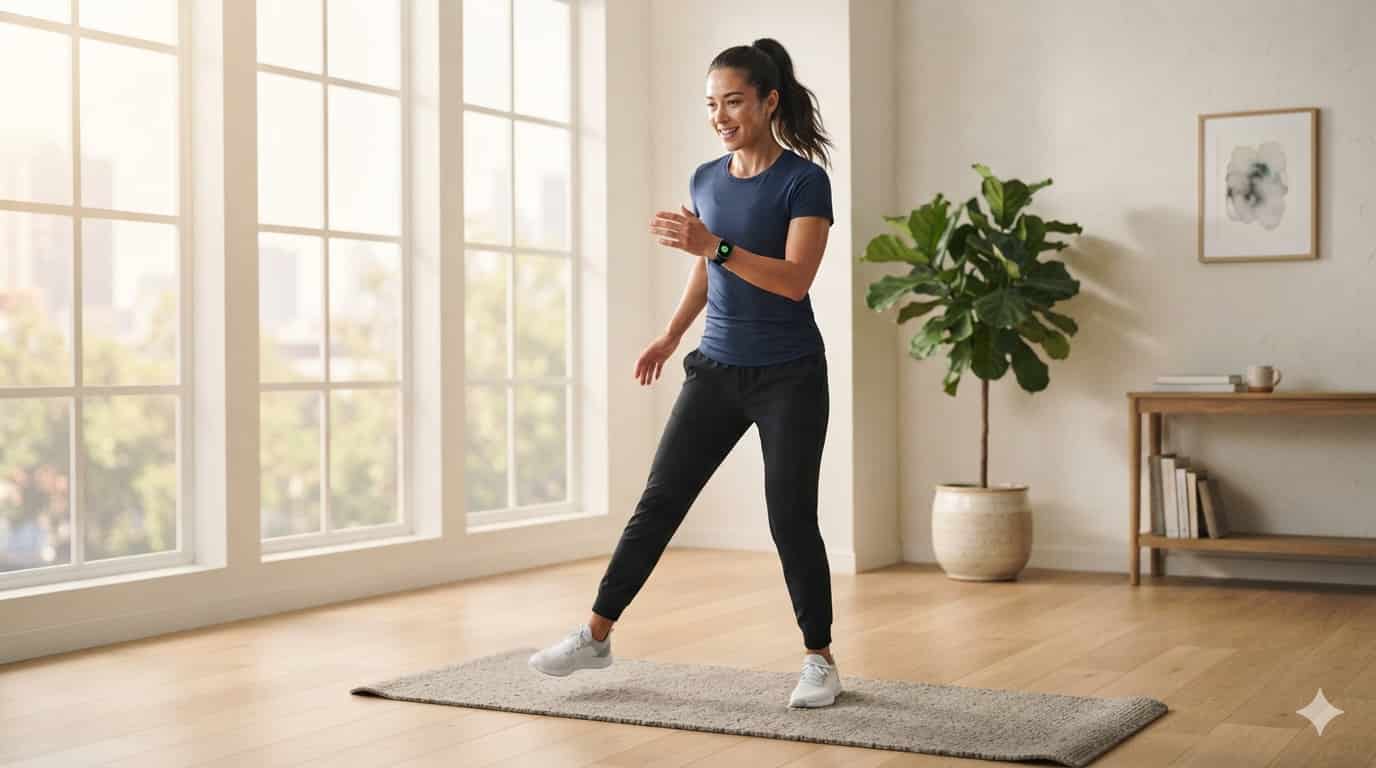
Executing a structured zone 2 cardio workout at home is one of the most effective ways to build mitochondrial density, torch stubborn visceral fat, and skyrocket cardiovascular longevity without setting foot in a commercial gym. In recent years, exercise physiology and longevity science have converged on a singular truth: training at a gentle, steady aerobic pace produces far greater cellular health than constantly pushing your body to absolute exhaustion in brutal HIIT workouts.
While modern fitness culture glorifies gasping for air in extreme HIIT circuits, committing to a consistent zone 2 cardio workout at home trains your aerobic engine to burn lipids as its primary metabolic fuel. When you train too hard in Zones 3, 4, or 5, your body shifts from burning fat to burning stored carbohydrates, producing high levels of lactate and systemic cortisol that require days of recovery.
Whether you want to lower your resting heart rate, improve metabolic flexibility, or build an unbreakable cardiovascular foundation inside a small apartment, here are the 7 proven steps to master low-intensity steady-state (LISS) training with zero equipment.
Why You Need a Zone 2 Cardio Workout at Home
Many fitness enthusiasts struggle to maintain steady-state training, but executing a calibrated zone 2 cardio workout at home prevents the nervous system burnout and joint pounding associated with high-impact road running.
Maintaining your heart rate in Zone 2—roughly 65% to 75% of your maximum heart rate—stimulates three transformative biological adaptations:
- Mitochondrial Biogenesis: Slow, continuous aerobic work signals your muscle cells to build more mitochondria (cellular powerhouses) and makes existing ones vastly more efficient at metabolizing fatty acids.
- Lactate Clearance Efficiency: Training at this exact threshold conditions your slow-twitch muscle fibers to clear and recycle blood lactate into energy before it accumulates into muscle burn.
- Low-Stress Recovery: Zone 2 cardio stimulates parasympathetic blood flow and capillary density without spiking systemic inflammation, allowing you to train frequently without compromising your strength workouts.
Adopting an intelligent zone 2 cardio workout at home gives you the cardiovascular health of an elite endurance athlete without leaving your living room.
7 Proven Zone 2 Cardio Workout at Home Steps for Longevity and Stamina
1. The Conversational Cadence Test (The Heart Rate Anchor)
The foundational rule of any zone 2 cardio workout at home is maintaining a strictly conversational cadence where you can speak a full sentence through your nose without gasping. If you cannot maintain a complete sentence without pausing for an open-mouthed breath, you have crossed into Zone 3.
- Target Heart Rate Formula (Maffetone Method): Subtract your age from 180 (e.g., a 35-year-old’s target Zone 2 ceiling is 145 BPM).
- The “Singing vs. Talking” Rule: You should feel energetic enough that you could comfortably hold a phone conversation, but working hard enough that you could not easily sing a song without breath disruption.
(Affiliate Tip: Ideal spot to recommend accurate Bluetooth chest-strap heart rate monitors like Polar H10 or Garmin HRM).
2. Aerobic Shadow Boxing and Step-Touches (Zero Impact)
Integrating rhythmic low-impact calisthenics transforms a zone 2 cardio workout at home into an engaging, joint-friendly steady-state flow. Instead of staring at a wall, alternating between side-to-side step-touches and rhythmic shadow boxing keeps your heart rate stable without jarring your knees.
- Execution Flow:
- 2 minutes of rhythmic lateral step-touches with gentle arm sweeps.
- 2 minutes of stationary boxing punches (jabs, crosses, hooks) with light foot bounces.
- Repeat continuously in a smooth, frictionless rhythm.
- Biomechanical Cue: Keep your shoulders completely relaxed; do not tense your traps or clench your fists tightly.
3. The Staircase Pacing Protocol
Using a single staircase step offers one of the most reliable methods for a zone 2 cardio workout at home to keep your pulse at exactly 65% to 75% of your maximum heart rate. Stepping up and down on a single bottom staircase step requires almost zero floor space while continuously activating glutes, quads, and calves.
- Cadence Target: Roughly 60 to 75 steps per minute.
- Execution: Step up with your right foot, follow with your left foot, step down with your right, then step down with your left.
- Lead-Foot Swap: Switch your leading foot every 5 minutes to ensure balanced lower-body muscular loading.
(Affiliate Tip: Great spot to link to non-slip aerobic exercise step platforms).
4. Strict Nasal-Only Breathing Practice
Breathing solely through your nostrils keeps your zone 2 cardio workout at home anchored safely below the anaerobic lactate threshold. Nasal breathing stimulates nitric oxide production in the paranasal sinuses, which dilates blood vessels in your lungs and improves blood oxygenation.
- The Metabolic Gatekeeper: The human mouth is an emergency respiratory intake valve. The moment you are forced to gasp through your mouth, your body has shifted into glycolytic metabolism.
- Nasal Training Cue: Inhale for three counts through your nose, expand your diaphragm, and exhale smoothly through your nose for three counts.
Maintaining long-term athletic durability through achieving cardiorespiratory fitness keeps your aerobic baseline elevated and makes everyday physical tasks effortless.
5. The 45-Minute Continuous Endurance Block
Sustaining your zone 2 cardio workout at home for at least 45 minutes triggers deep mitochondrial biogenesis and clears cellular metabolic waste. While short 15-minute bursts are beneficial for general mobility, the true longevity adaptations of Zone 2 require extended metabolic exposure.
- Target Session Length: 45 to 60 uninterrupted minutes.
- Entertainment Pairing: Because Zone 2 cardio is low-stress, it is the perfect time to listen to educational audiobooks, professional podcasts, or watch a documentary without feeling distracted by heavy panting.
6. Low-Impact High-Knee Marches and Butt Kicks
Marching steadily in place while bringing your knees to hip level engages your core and hip flexors. Combining gentle aerobic pacing with restorative practices like yoga for mental health training resets your autonomic nervous system from work stress into relaxed cardiovascular resilience.
- Execution: Pump your arms rhythmically as if hiking uphill, landing softly on the balls of your feet to avoid heel-strike shock.
- Transition: Alternate between 3 minutes of high-knee marching and 3 minutes of slow butt-kick strides.
7. Gentle Cooldown and Hydration Replenishment
Conclude your session with three minutes of slow walking around your living room followed by 500ml of water with a pinch of mineral salt. Decelerating gradually allows your vascular tone to return to resting state without venous blood pooling in your legs.
Biomechanics: How a Zone 2 Cardio Workout at Home Supercharges Mitochondria
The biological brilliance of a routine zone 2 cardio workout at home is developing slow-twitch type-I muscle fibers, which use oxygen to metabolize fatty acids into ATP energy.
| Training Zone | % of Max Heart Rate | Primary Fuel Source | Lactate Accumulation | Weekly Goal |
| Zone 1 (Recovery) | 50% – 60% | Pure Lipids / Fat | Near Zero | Daily movement |
| Zone 2 (Aerobic Base) | 65% – 75% | Maximum Fat Oxidation | Balanced / Cleared | 150–180 mins/week |
| Zone 3 (Tempo) | 75% – 85% | Mixed Fats & Glycogen | Starts Climbing | Use sparingly |
| Zone 4 (Threshold) | 85% – 90% | Pure Muscle Glycogen | Rapid build-up | 1 session/week |
| Zone 5 (VO2 Max) | 90% – 100% | Anaerobic Phosphagen | Extreme fatigue | 5–10 mins/week |
Weekly Scheduling and Best Practices
Executing this accessible zone 2 cardio workout at home three to four times per week delivers profound improvements in resting blood pressure and VO2 max.
- Weekly Dose Recommendation: Aim for 150 to 180 total minutes of Zone 2 per week (e.g., three 50-minute sessions or four 40-minute sessions).
- Can You Do It Fasted? Yes; performing Zone 2 in a fasted morning state encourages fat mobilization, but a light, non-acidic snack beforehand is completely fine if you feel low on energy.
- Footwear Matters: Even indoors on a carpet or yoga mat, wearing cushioned athletic shoes protects your plantar fascia during 45 minutes of continuous stepping.
Adopting this sustainable zone 2 cardio workout at home proves that world-class metabolic health and cardiovascular stamina require zero expensive exercise machines.
Connect With Us & Share Your Progress
For practical cardiovascular routines, home fitness setups, and active wellness tips, join our growing digital fitness community:
- Follow our visual exercise guides on FitKiter on Pinterest
- Join our community fitness discussions on FitKiter on Facebook