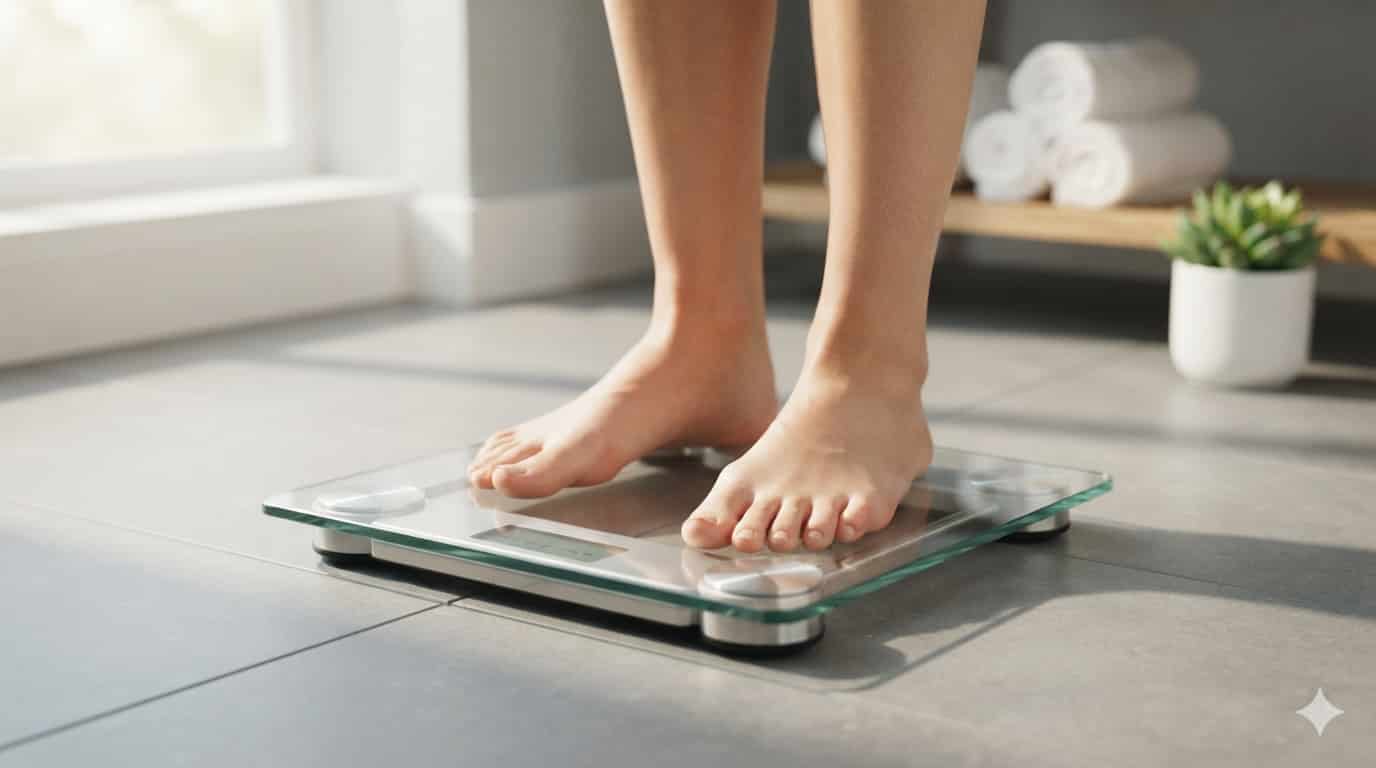
Learning actionable smart scale body fat accuracy tips can save you from immense frustration when your daily body composition numbers fluctuate wildly without explanation. You step on your digital bathroom scale on Monday morning and celebrate a 17% body fat reading, only to step on it Tuesday and see it jump inexplicably to 19.5%.
While bioelectrical impedance scales offer convenient home metrics, utilizing practical smart scale body fat accuracy tips ensures that your measurements reflect actual adipose tissue changes rather than simple fluid shifts. Smart scales do not directly weigh your body fat; instead, they send an imperceptible, low-frequency electrical impulse through your bare feet and measure how fast that current travels against tissue resistance.
Because electrical currents travel rapidly through water-dense muscle and encounter high resistance through fat, your hydration status, skin temperature, and calloused soles can drastically alter the final algorithm. By following standardized measurement protocols, you can transform an unpredictable bathroom gadget into a dependable long-term tracking tool.
Here are the 7 proven rules to get consistent, trustworthy data from your home bioimpedance scale.
Why You Need Smart Scale Body Fat Accuracy Tips
Many fitness enthusiasts seek out smart scale body fat accuracy tips because seeing a 3% jump in body fat overnight triggers unnecessary panic.
It is physically impossible to gain or lose two pounds of pure adipose tissue in a single 24-hour cycle. When your scale numbers swing violently, three confounding variables are usually responsible:
- Hydration Variability: Drinking two glasses of water or sweating heavily changes intracellular and extracellular water ratios, causing the electrical current to slow down or speed up unnaturally.
- Surface Deflection: Placing your scale on thick carpet, uneven grout tiles, or rubber gym flooring distributes your body weight unevenly across the four strain-gauge load sensors.
- Glycogen Depletion: Following a low-carbohydrate meal or an intense training session, depleted muscle glycogen sheds water, making lean muscle mass look artificially low to the scale’s algorithm.
Implementing disciplined smart scale body fat accuracy tips removes daily measurement noise, allowing you to focus on genuine long-term biological trends.
7 Proven Smart Scale Body Fat Accuracy Tips for Consistent Results
1. The Fasted Morning Baseline (Zero Hydration Noise)
Among the most critical smart scale body fat accuracy tips, weighing yourself immediately after waking up and emptying your bladder establishes an uncompromised baseline. This is the only moment during the day when your internal hydration level, digestive tract contents, and core temperature remain relatively stable.
- Ideal Timing: Immediately after waking and urinating.
- Condition: Fasted, before drinking water, coffee, or consuming food.
How to Execute:
- Wake up and use the bathroom to void your bladder completely.
- Step on the scale completely naked or in minimal underwear to eliminate fabric weight variability.
- Avoid taking a single sip of water before the reading is registered on the app.
2. The Hard, Level Surface Requirement
Placing your device exclusively on hard tile or hardwood represents one of the simplest smart scale body fat accuracy tips to avoid sensor distortion. Setting a smart scale on carpet, vinyl planks with soft underlayment, or flexible rubber gym flooring absorbs mechanical force.
- Best Surfaces: Ceramic tile, sealed concrete, or rigid hardwood.
- Surfaces to Avoid: Bath mats, plush rugs, interlocking foam tiles.
How to Execute:
- Find a permanently flat, non-yielding spot on your floor.
- Leave the scale in that exact location rather than sliding it under a cabinet every morning.
- Tap the center with one foot to let the internal load cells calibrate to zero before stepping on.
3. Dry, Bare Feet and Clean Conductive Electrodes
Another essential item among smart scale body fat accuracy tips is wiping the conductive metal footpads clean and stepping on them with dry, warm feet. Oil residues, lotion, or excessive moisture on your heels dramatically alter electrical contact resistance.
- Foot Preparation: Clean, barefoot, free of lotion, and completely dry.
- Scale Maintenance: Wipe the tempered glass and metal ITO (Indium Tin Oxide) sensors with a dry microfiber cloth weekly.
How to Execute:
- Never step on the scale immediately after taking a hot shower; excessive skin dampness conducts electricity too rapidly, giving artificially low fat readings.
- If your feet are cold, rub them together briskly for five seconds to stimulate peripheral capillary blood flow before standing on the sensors.
4. Never Weigh Immediately After Intense Workouts
Experienced trainers emphasize smart scale body fat accuracy tips that warn against stepping on the scale immediately after sweaty cardio sessions. When you finish exercising, your muscles are dehydrated from sweat loss while blood is pooled in your extremities for cooling.
- Why Post-Workout Fails: Dehydration increases electrical resistance, tricking the scale into registering lost water as pure body fat.
- Best Protocol: Save your weigh-ins for rest mornings or pre-workout states.
Pairing consistent lifestyle habits with steady achieving cardiorespiratory fitness keeps your cardiovascular vascularity high without letting short-term sweat fluctuations confuse your scale readings.
5. Track 7-Day Rolling Moving Averages
Adopting rolling weekly 7-day averages is one of the smartest analytical smart scale body fat accuracy tips to filter out daily water weight noise. A single day’s reading means almost nothing; the rolling weekly trajectory reveals true physiological changes.
- Calculation: Add your daily body fat readings from Monday through Sunday and divide by seven.
- Action Trigger: Compare the average of Week 1 to Week 2; if the weekly trendline slopes downward, you are losing fat regardless of daily blips.
6. Keep Evening Carbohydrate and Sodium Intake Consistent
Eating a high-sodium restaurant meal or a large pasta dinner causes your body to hold up to four pounds of extra extracellular fluid the following morning. Pairing structured biometric tracking with mindful yoga for mental health training prevents emotional overreactions to temporary water-retention spikes.
- The Sodium Effect: Excess sodium holds water outside your cells, slowing electrical currents and artificially shifting body fat readings.
- The Solution: Note high-sodium dinners in your logging app so you can disregard the next morning’s temporary spike.
7. Match Your User Profile Settings Accurately
Virtually all smart scales require you to enter your age, biological sex, height, and activity level into their companion mobile app. These algorithms rely heavily on demographic equations to calculate your final percentages.
- Athlete Mode Warning: Only enable “Athlete Mode” if you train over 10 hours per week and possess an exceptionally dense, muscular build with very low resting heart rates. For average gym-goers, standard mode yields far more realistic baseline estimations.
Biomechanics: How Smart Scale Body Fat Accuracy Tips Solve BIA Errors
The science behind these smart scale body fat accuracy tips centers around bioelectrical impedance analysis, which calculates tissue density by sending a painless micro-current through your feet.
| Variable | Physical State | Scale Reading Impact | Correct Protocol |
| Post-Shower Damp Skin | Excess surface water | Artificially Low Fat % | Measure on dry skin before bathing |
| Severe Dehydration | Reduced intracellular water | Artificially High Fat % | Weigh morning fasted after urinating |
| Carpet Flooring | Uneven sensor pressure | Random erratic weight | Use hard tile or rigid hardwood |
| Post-Workout Sweat | Depleted fluid & electrolyte shift | Distorted muscle density | Avoid measuring right after gym |
| Cold Feet | Constricted blood vessels | Higher electrical resistance | Warm feet slightly before stepping on |
The Long-Term Perspective on Bioimpedance Tracking
Consistently following these standardized smart scale body fat accuracy tips transforms an erratic gadget into a reliable navigational compass for your fitness journey.
Remember that a home smart scale is not an expensive clinical DEXA scan or hydrostatic underwater weighing tank. Its superpower is not pinpoint absolute clinical perfection on any single day, but rather relative trend tracking over three to six months under identical daily testing conditions.
Applying these proven smart scale body fat accuracy tips ensures you stay motivated and make rational adjustments to your nutrition without letting sensor anomalies derail your mindset.
Connect With Us & Share Your Progress
For practical health gear advice, daily workout routines, and sustainable wellness tips, join our growing digital fitness community:
- Follow our visual wellness infographics on FitKiter on Pinterest
- Join our community discussions on FitKiter on Facebook