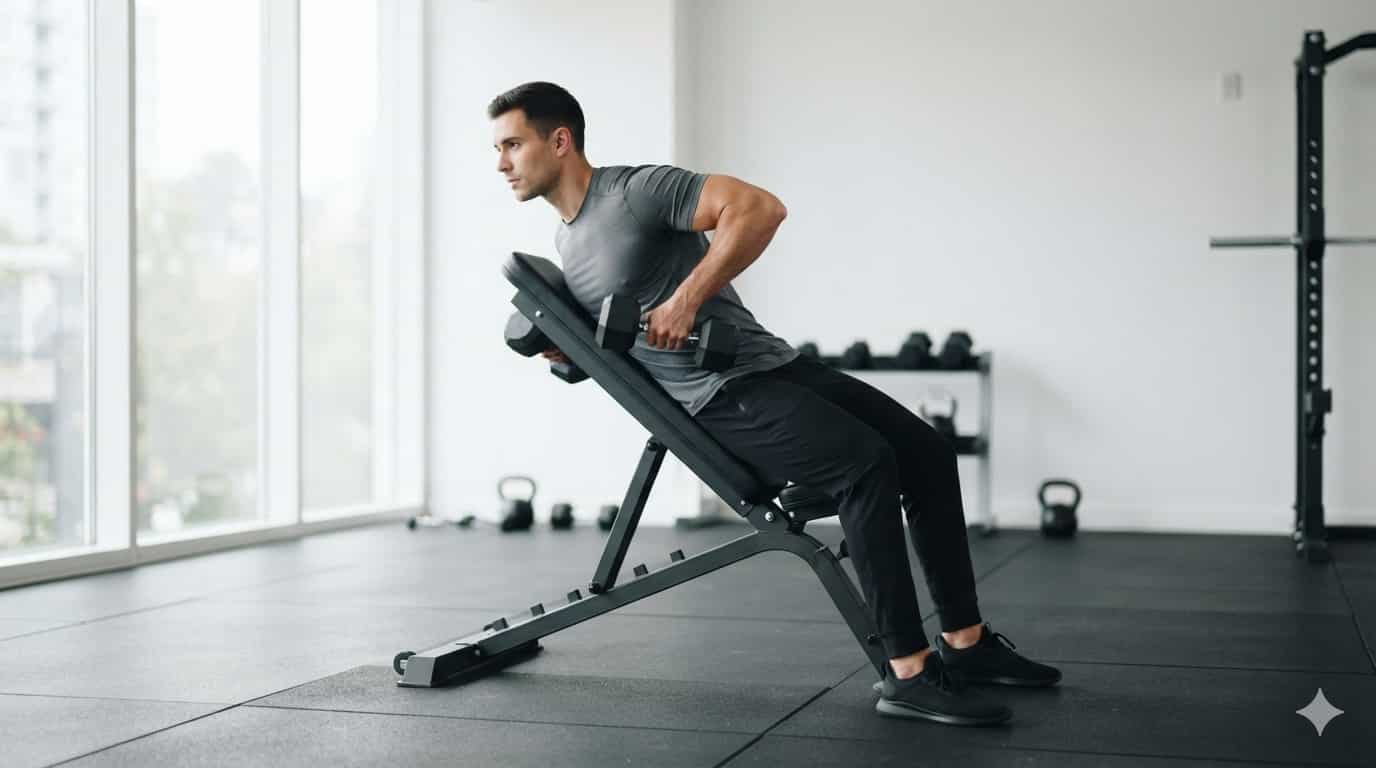
Finding effective seated cable row alternatives with dumbbells allows you to build a dense, muscular mid-back without relying on heavy commercial pulley equipment. The seated cable row is celebrated across bodybuilding circles for delivering continuous horizontal tension directly to the rhomboids, latissimus dorsi, and middle trapezius.
While seated cable stations provide steady horizontal tension, mastering smart seated cable row alternatives with dumbbells enables you to isolate the rhomboids and lats using basic free weights. You do not need an expensive selectorized weight stack or a commercial gym membership to forge a 3D back. Dumbbells actually present a major biomechanical advantage over rigid steel cable attachments: they allow your wrists, forearms, and elbows to rotate freely through a natural, joint-friendly pathway.
Whether you train in a garage home gym, work out while traveling, or want to bypass the crowded cable stations in commercial gyms, here are the 7 best dumbbell row variations that deliver superior back thickness.
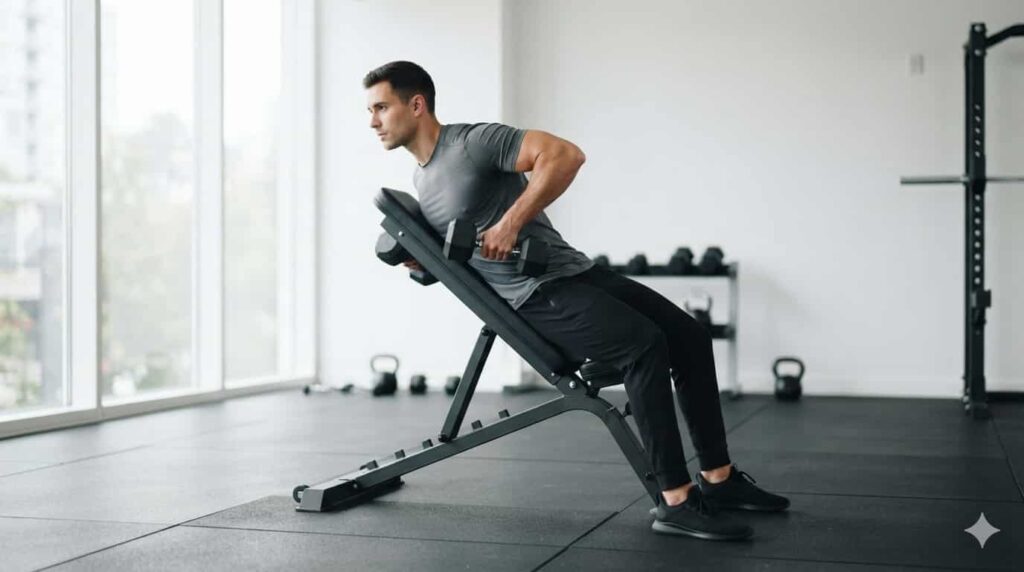
Why You Need Seated Cable Row Alternatives with Dumbbells
Many home gym lifters seek out seated cable row alternatives with dumbbells because low-pulley row towers require immense ceiling height and hundreds of pounds of counterweight.
Beyond space limitations, dumbbell rowing offers three distinct anatomical advantages:
- Independent Unilateral Recruitment: Fixed cable handles lock your dominant and non-dominant sides together, allowing your stronger arm to compensate. Dumbbells force both sides of your back to pull equal loads.
- Dynamic Wrist Articulation: Rigid metal cable handles trap your forearms in fixed pronation or supination. Dumbbells let you start in a neutral grip and rotate naturally to match your scapular mechanics.
- Lower Lumbar Strain (When Supported): Many lifters round their lower backs during heavy cable rows, risking spinal flexion injuries. Chest-supported dumbbell alternatives completely remove axial spinal shear.
Adopting these reliable seated cable row alternatives with dumbbells ensures that your back training remains progressive, joint-friendly, and highly adaptable to any training space.
7 Best Seated Cable Row Alternatives with Dumbbells for Back Thickness
1. Chest-Supported Incline Dumbbell Row (The Ultimate Direct Swap)
As the gold standard among seated cable row alternatives with dumbbells, the chest-supported incline row completely eliminates lower back fatigue while isolating the mid-back. Resting your sternum against a stable incline bench replicates the upright torso stabilization of a seated cable machine.
- Target Muscles: Rhomboids, mid-traps, posterior deltoids, lats.
- Equipment Needed: Adjustable bench (set to 30–45 degrees), pair of dumbbells.
How to Perform:
- Set an adjustable bench to a 30-to-45-degree incline and lie face-down with your chest supported against the pad.
- Hold a dumbbell in each hand with your arms hanging fully extended, palms facing each other.
- Retract your shoulder blades and drive your elbows backward toward your hips.
- Squeeze your mid-back firmly for one full second at the top of the pull.
- Inhale and lower the weights slowly under control, allowing your shoulder blades to spread naturally at the bottom.
2. Single-Arm Dumbbell Row with Flat Bench Support
For maximum lat extension, single-arm rowing stands out as one of the most accessible seated cable row alternatives with dumbbells you can perform anywhere. It allows for a massive stretch of the lower lats at the bottom followed by full retraction at the top.
- Target Muscles: Latissimus dorsi, teres major, obliques.
- Equipment Needed: Flat bench, single heavy dumbbell.
How to Perform:
- Place your left knee and left hand firmly on a flat bench to support your spine.
- Keep your right foot planted on the floor and hold a dumbbell in your right hand.
- Let the dumbbell stretch your arm down while keeping your back parallel to the floor.
- Pull the dumbbell in a smooth arc toward your hip crease (not your armpit), driving with your elbow.
- Pause for a squeeze before lowering smoothly over three seconds.
3. Seated Incline Dumbbell Elbows-Out Row (Rhomboid Focus)
Performing rows seated backward on an incline bench provides one of the cleanest seated cable row alternatives with dumbbells to mimic a wide-grip cable attachment. Flaring your elbows out to 60–75 degrees shifts the load directly onto the upper back and rear delts.
- Target Muscles: Rhomboids, lower/mid trapezius, rear delts.
- Equipment Needed: Incline bench, moderate dumbbells.
How to Perform:
- Sit facing the bench with your chest resting on the pad.
- Hold the dumbbells with an overhand (pronated) grip.
- Row the weights upward while allowing your elbows to flare out wide to the sides.
- Focus on pinching your shoulder blades together behind your heart without shrugging your neck.
- Lower smoothly to full extension.
4. Bent-Over Dumbbell Row with Neutral Grip
Utilizing a parallel grip on free weights gives you versatile seated cable row alternatives with dumbbells that build posterior chain integrity. This movement strengthens your hamstrings, glutes, and spinal erectors while loading your back.
- Target Muscles: Full posterior chain, lats, rhomboids.
- Equipment Needed: Pair of moderate-to-heavy dumbbells.
How to Perform:
- Stand with feet hip-width apart, holding dumbbells at your sides.
- Hinge at your hips until your torso is roughly 45 degrees to the floor, keeping your back flat.
- Row both dumbbells simultaneously toward your ribcage with palms facing inward.
- Keep your elbows tracking tight along your ribs throughout the rep.
- Lower the dumbbells back down with strict control without bouncing your hips.
5. Flat Bench Dumbbell Seal Row
Setting up an elevated flat bench creates one of the strictest seated cable row alternatives with dumbbells with zero leg momentum. Because your body lies completely parallel to the floor with your feet suspended, you cannot use hip drive to cheat the weight up.
- Target Muscles: Pure mid-back isolation, lat thickness.
- Equipment Needed: Flat bench elevated on sturdy boxes or weight plates, dumbbells.
How to Perform:
- Elevate a flat bench on two sturdy blocks so your arms can reach full extension beneath it.
- Lie face-down with your torso flat across the bench.
- Grasp your dumbbells and pull straight up until the weights tap the underside of the bench.
- Squeeze your shoulder blades hard at peak contraction before lowering slowly.
Pairing dedicated back isolation with functional foldable Pilates machines for home workouts allows you to balance muscle hypertrophy with core stabilization in small spaces.
6. Seated Floor Dumbbell Row (Cable Imitation)
If you have no bench available, sitting flat on the floor with your legs out in front replicates the exact torso angle of the cable machine.
- Target Muscles: Mid-traps, rhomboids, spinal erectors.
- Equipment Needed: Exercise mat, pair of dumbbells.
How to Perform:
- Sit tall on the floor with your legs straight out, knees slightly unlocked.
- Hold dumbbells at your sides with palms facing inward.
- Lean forward slightly from the hip crease, then pull your elbows back tight against your torso as you sit up tall.
- Squeeze your back hard at the peak before releasing forward into a gentle stretch.
7. Prone Incline Dumbbell Shrug-Row (Scapular Retractor)
Concluding your pulling session with pure scapular retraction strengthens posture. Pairing heavy horizontal pulling with cardiovascular conditioning like achieving cardiorespiratory fitness keeps your metabolic furnace burning while building muscular endurance.
- Target Muscles: Rhomboids, mid-trapezius isolation.
- Equipment Needed: Incline bench, light dumbbells.
How to Perform:
- Lie face-down on an incline bench with arms straight down holding light dumbbells.
- Keeping your arms completely straight at the elbows, pinch your shoulder blades together as hard as possible.
- Hold the pinch for two full seconds, then release them back down.
Biomechanics: How Seated Cable Row Alternatives with Dumbbells Build Upper Back Density
The primary reason these seated cable row alternatives with dumbbells produce exceptional muscle growth is that dumbbells permit natural wrist rotation during the pull.
| Exercise | Lumbar Fatigue | Setup Complexity | Lat Focus | Upper Back / Rhomboid Focus |
| Traditional Cable Row | Moderate | High (Machine required) | High | Moderate |
| Chest-Supported Incline Row | Zero (Safest) | Low (Bench & DBs) | High | Very High |
| Single-Arm Dumbbell Row | Low | Low | Maximum | Moderate |
| Incline Elbows-Out Row | Zero | Low | Low | Maximum |
| Seal Row with DBs | Zero | Medium | High | High |
| Bent-Over DB Row | High | Minimal | High | High |
How to Program These Dumbbell Swaps for Progressive Overload
Incorporating progressive overload into your seated cable row alternatives with dumbbells guarantees continuous mid-back thickness without cable friction.
To maximize your results:
- Heavy Compound Foundation: Start with the Chest-Supported Incline Row (3 sets of 8–10 reps using a 3-second lowering tempo).
- Unilateral Finisher: Follow with Single-Arm Dumbbell Rows (3 sets of 12–15 reps per arm, focusing on full lat stretch at the bottom).
- Progressive Metrics: Increase dumbbell weight, add micro-pauses at peak contraction, or slow the eccentric phase to force new growth.
Practicing these adaptable seated cable row alternatives with dumbbells proves that you do not need selectorized cable machines to sculpt a powerful V-taper.
Connect With Us & Share Your Progress
For practical workout outlines, home gym setups, and healthy lifestyle routines, join our growing digital fitness community:
- Follow our visual exercise guides on FitKiter on Pinterest
- Join our community discussions on FitKiter on Facebook