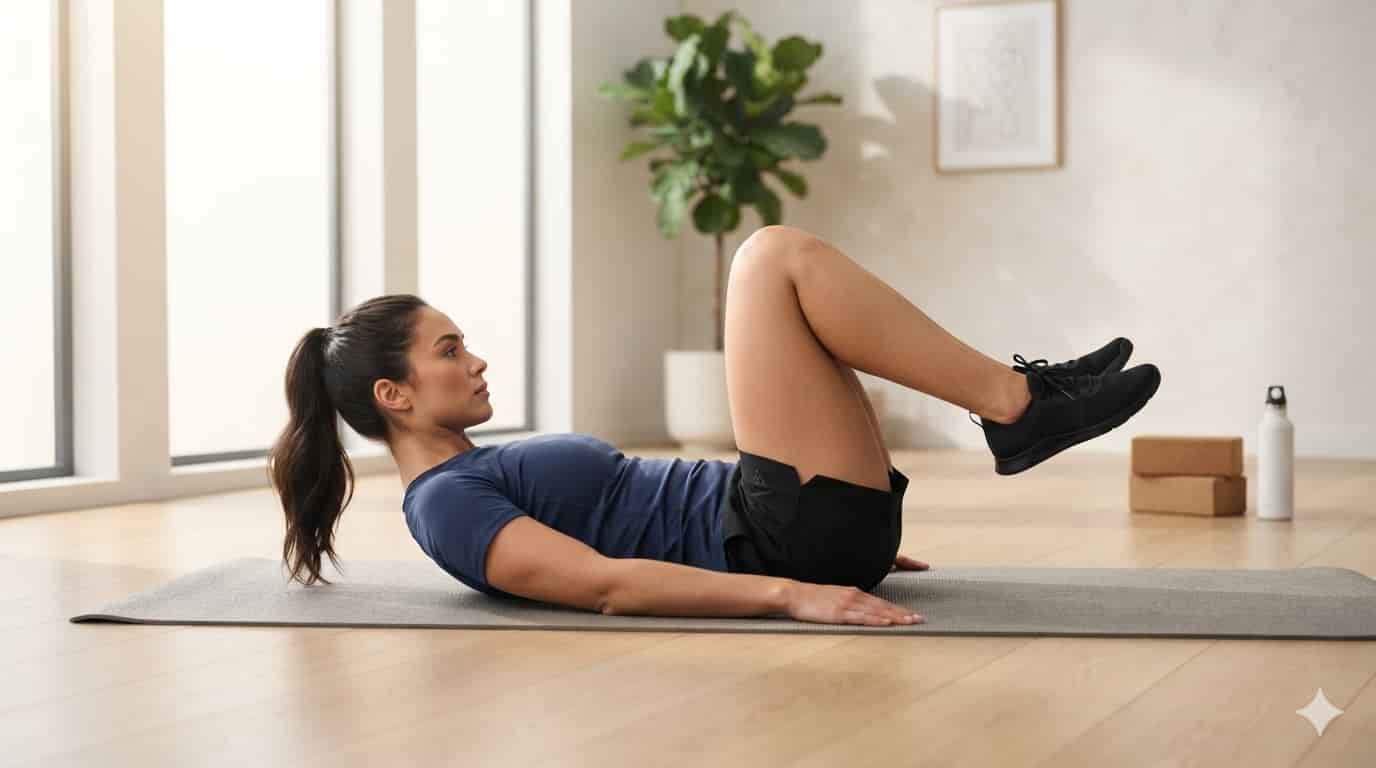
Finding effective hanging leg raise alternatives for lower abs is essential when shoulder fatigue, weak grip strength, or a lack of pull-up bars stalls your core training. The traditional hanging leg raise is widely hailed as an elite exercise for abdominal definition, but gripping a bar overhead places immense demand on your forearms, lats, and rotator cuffs.
While the hanging bar raise is renowned for targeting the rectus abdominis, executing smart hanging leg raise alternatives for lower abs delivers deep abdominal activation without straining your rotator cuffs. Most trainees fail to isolate their lower core on a pull-up bar simply because their hands slip or their shoulders ache long before their abs reach genuine muscular fatigue.
By shifting your training down to the floor, an incline bench, or parallel bars, you can remove upper-body limitations entirely. Below are 7 proven alternatives that hammer the lower rectus abdominis and deep transverse stabilizers using zero pull-up bars.
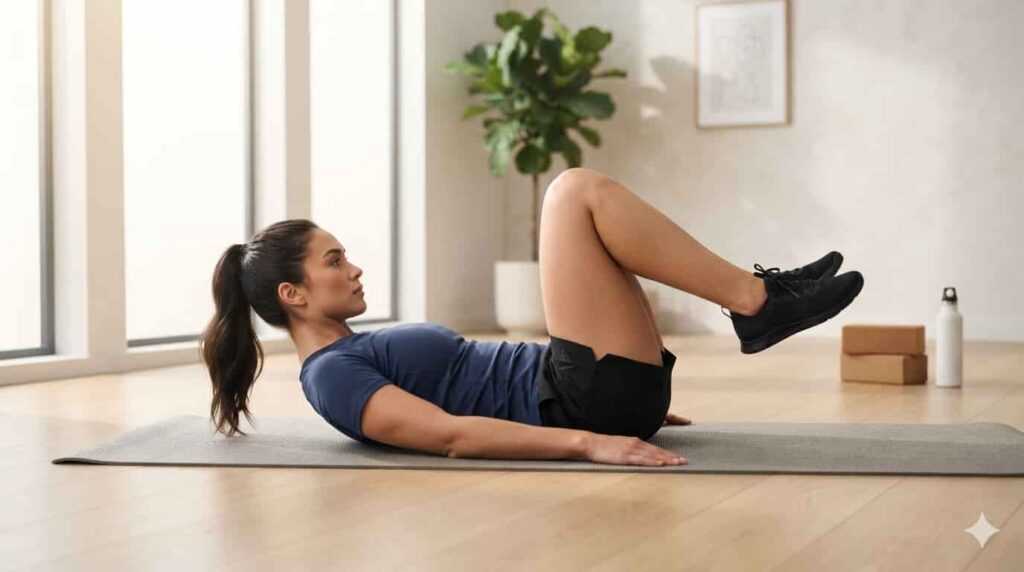
Why You Need Hanging Leg Raise Alternatives for Lower Abs
Many fitness enthusiasts seek out hanging leg raise alternatives for lower abs because grip failure often cuts their sets short before the lower core reaches true fatigue.
Traditional hanging variations introduce three common mechanical flaws that hinder core development:
- Hip Flexor Domination: Lifters often swing their legs upward using their psoas and rectus femoris rather than actually rolling their pelvis upward toward the ribcage.
- Excessive Momentum: Swinging like a pendulum allows elastic kinetic energy to carry the legs, robbing the abdominal wall of isometric tension.
- Upper-Body Fatigue Bottlenecks: Sore shoulders or weak forearms terminate the exercise prematurely, leaving the target muscle group undertrained.
Switching to biomechanically grounded hanging leg raise alternatives for lower abs isolates posterior pelvic tilt mechanics and maximizes direct abdominal tension.
7 Proven Hanging Leg Raise Alternatives for Lower Abs You Can Do Anywhere
1. Lying Reverse Crunches with Posterior Pelvic Tilt
As one of the purest hanging leg raise alternatives for lower abs, the lying reverse crunch removes shoulder tension while focusing entirely on posterior pelvic rotation. By anchoring your hands behind your head against a heavy dumbbell or floor post, you generate maximum abdominal leverage.
- Target Area: Lower rectus abdominis, transverse abdominis.
- Equipment Needed: Floor mat, stable anchor (or floor palms).
How to Perform:
- Lie flat on your back on a mat, bending your knees at 90 degrees.
- Anchor your hands firmly behind your head against a heavy couch leg or dumbbell.
- Exhale forcefully and pull your knees toward your chest, curling your lower back and tailbone completely off the floor.
- Pause for one second at peak contraction, focusing on squeezing your lower belly.
- Inhale and lower your pelvis slowly back to the mat under strict control without arching your spine.
2. Captain’s Chair Leg and Knee Tucks
Utilizing forearm pad support provides one of the easiest hanging leg raise alternatives for lower abs to overcome weak grip strength. By resting your forearms on padded parallel supports, your upper body remains locked while your core does 100% of the lifting.
- Target Area: Rectus abdominis, obliques.
- Equipment Needed: Captain’s chair station or parallel dip bars.
How to Perform:
- Step into the tower and rest your forearms flat on the padded armrests, gripping the handles lightly.
- Press your lower back gently against the back pad to eliminate swinging.
- Raise your knees upward until your thighs break parallel with the floor.
- Consciously curl your hips slightly upward at the top to fire the lower abdominal fibers.
- Lower your legs smoothly without kicking your feet backward.
3. Decline Bench Reverse Leg Raises
Elevating your torso angle makes decline raises standout hanging leg raise alternatives for lower abs that match the gravity resistance of a bar. Performing the reverse curl against gravity on a 30-degree incline significantly amplifies mechanical overload.
- Target Area: Lower core, deep abdominal wall.
- Equipment Needed: Adjustable decline sit-up bench.
How to Perform:
- Lie backward on a decline bench with your head at the elevated end, gripping the top handles.
- Extend your legs with a soft bend in your knees.
- Contract your abs to pull your legs upward and curl your pelvis off the bench.
- Resist gravity on the descent, taking a disciplined 3-second negative before starting the next rep.
4. Seated Floor Knee In-and-Outs
Performing seated floor tucks delivers accessible hanging leg raise alternatives for lower abs perfect for home workouts. Balancing on your glutes forces your core to maintain continuous isometric bracing while your legs articulate dynamically.
- Target Area: Lower rectus abdominis, core stabilizers.
- Equipment Needed: None (bodyweight only).
How to Perform:
- Sit on the floor with your hands planted slightly behind your hips for balance.
- Lean your torso back at a 45-degree angle and lift your feet off the mat.
- Simultaneously pull your knees toward your chest while bringing your torso forward.
- Extend your legs back out straight without letting your heels touch the floor.
Pairing functional bodyweight core control with achieving cardiorespiratory fitness accelerates total-body caloric expenditure and helps reveal abdominal definition.
5. Gymnastic Hollow Body Rocks
Gymnastic hollow rocks serve as isometric hanging leg raise alternatives for lower abs that strengthen your deep transverse abdominis. This foundational gymnastics drill teaches complete pelvic control by eliminating the gap between your lower back and the mat.
- Target Area: Deep transverse abdominis, entire abdominal wall.
- Equipment Needed: Exercise mat.
How to Perform:
- Lie flat on your back, extending your arms overhead and pointing your toes.
- Press your lower back hard into the floor so that no space remains beneath your lumbar spine.
- Lift your head, shoulder blades, and straight legs 4 to 6 inches off the ground.
- Gently rock forward and backward like the bottom of a rocking chair, maintaining a rigid curved hollow shape throughout.
6. Floor Flutter Kicks with Lumbar Press
Flutter kicks generate rapid, alternating micro-contractions that fatigue lower core endurance quickly. Adding continuous lumbar floor pressure prevents your hip flexors from taking over the exercise.
- Target Area: Lower abs, hip stabilizers, lower back endurance.
- Equipment Needed: Floor mat.
How to Perform:
- Lie flat on your back with hands placed at your sides or beneath your glutes for pelvic support.
- Hover both feet 6 inches off the floor with legs fully straight.
- Kick your feet in a small, rapid up-and-down scissor motion.
- Maintain steady rhythmic nasal breathing, keeping your abdominal wall drawn inward.
7. Stability Ball Reverse Pikes
Finishing your core session with stability ball tucks or pikes elevates stability. Pairing focused core control with calming practices like yoga for mental health training reduces sympathetic stress and optimizes physical balance.
- Target Area: Lower rectus abdominis, serratus anterior, shoulders.
- Equipment Needed: Swiss exercise ball.
How to Perform:
- Assume a push-up plank position with your shins resting centered on a stability ball.
- Pull your knees toward your chest, rolling the ball forward using your abdominal contraction.
- Pause for a squeeze before rolling the ball back out into a straight plank.
Biomechanics: How Hanging Leg Raise Alternatives for Lower Abs Isolate the Core
The biomechanical secret of reliable hanging leg raise alternatives for lower abs is rotating the pelvis toward the ribcage rather than simply flexing the hip flexors.
| Exercise | Grip/Shoulder Strain | Pelvic Rotation Focus | Setup Complexity | Best For |
| Traditional Hanging Raise | Very High | Moderate (Often swings) | High (Bar required) | Advanced gym-goers |
| Lying Reverse Crunch | Zero (Safest) | Maximum | Minimal (Mat only) | Home core isolation |
| Captain’s Chair Raise | Zero | High | Low (Gym tower) | Intermediate hypertrophy |
| Decline Bench Raise | Zero | Very High | Moderate (Decline bench) | Progressive overload |
| Hollow Body Rocks | Zero | Isometric Pelvic Lock | Minimal | Gymnastic core strength |
How to Program These Exercises for Maximum Core Definition
Integrating these progressive hanging leg raise alternatives for lower abs two to three days per week guarantees profound core definition without hanging from a bar.
To maximize your results:
- Primary Compound Movement: Decline Bench Reverse Raises or Captain’s Chair Tucks (3 sets of 12–15 strict repetitions).
- Controlled Isolation Finisher: Lying Reverse Crunches or Hollow Body Rocks (3 sets of 45 seconds continuous tension).
- Execution Rule: Never rush your reps. A slow 2-second squeeze at peak pelvic curl produces significantly more muscle fiber recruitment than 20 fast, swinging repetitions.
Practicing these versatile hanging leg raise alternatives for lower abs proves you can build an elite, iron-clad core entirely on the floor.
Connect With Us & Share Your Progress
For practical ab workouts, home training routines, and healthy living tips, join our growing digital fitness community:
- Follow our visual core workouts on FitKiter on Pinterest
- Join our health and fitness discussions on FitKiter on Facebook