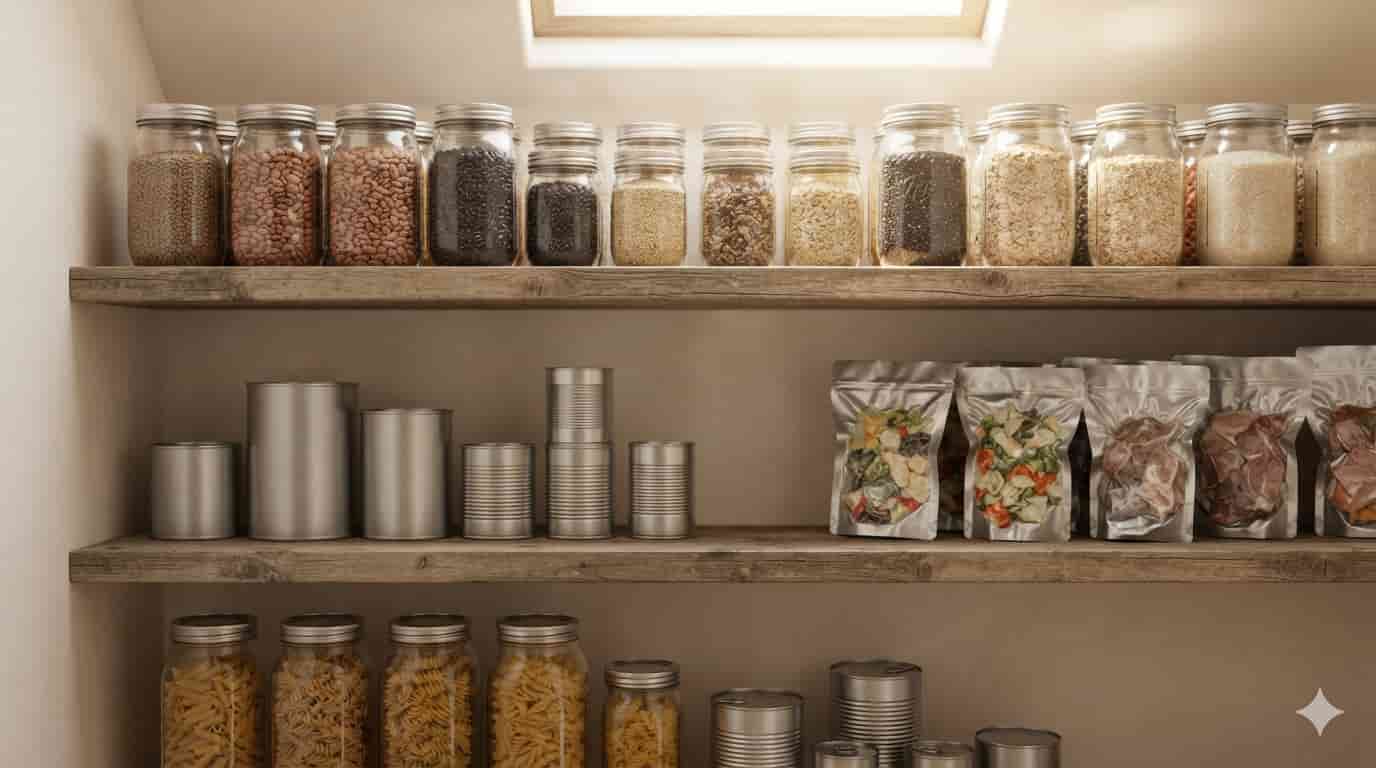
Building a reliable high protein emergency food supply is critical when severe weather, electrical grid failures, or supply chain bottlenecks compromise access to fresh groceries. Most household disaster preps focus heavily on bulk white rice, refined pasta, and instant noodles. While carbohydrates provide quick caloric bulk, surviving exclusively on low-protein rations leads to rapid muscle wasting, immune fatigue, and sluggish cognitive performance.
While standard disaster kits emphasize white rice and ramen noodles, securing an optimal high protein emergency food supply ensures you sustain muscular stamina and immune defenses under stress. In high-stress scenarios—whether you are clearing storm debris, hiking to safety, or managing household repairs during a winter blackout—your body demands 20 to 30 grams of protein per meal to maintain tissue recovery and cellular repair.
Whether you are designing a compact 72-hour survival pantry, outfitting a storm shelter, or building long-term family self-reliance, here are 7 shelf-stable, high-density protein staples that require zero refrigeration.
Why You Need a High Protein Emergency Food Supply
Many preparedness-minded households overlook their high protein emergency food supply by hoarding cheap carbohydrates that trigger blood sugar crashes.
Prioritizing shelf-stable protein over pure starch delivers three vital physiological benefits during crises:
- Immune System Preservation: Immunoglobulins and white blood cells rely on bioavailable amino acids to fight off opportunistic pathogens when sanitation infrastructure fails.
- Sustained Satiety and Blood Sugar Stability: Simple carbs trigger rapid insulin spikes followed by debilitating energy crashes; protein promotes steady hormonal regulation and suppresses panic-induced hunger.
- Physical Strength and Stamina: Crisis scenarios often demand rigorous physical exertion, from lifting heavy objects to walking long distances with emergency packs.
Establishing a nutrient-dense high protein emergency food supply protects your family’s physical independence when standard municipal utilities collapse.
7 Proven High Protein Emergency Food Supply Options for Long-Term Storage
1. Freeze-Dried Beef and Chicken Pouches (25-Year Shelf Life)
When curating an ultra-long-lasting high protein emergency food supply, freeze-dried beef and chicken pouches boast a 25-year shelf life with zero refrigeration. Unlike dehydrated foods that lose nutritional integrity, the freeze-drying process (lyophilization) removes 98% of moisture while preserving 97% of natural vitamins, enzymes, and intact animal amino acids.
- Protein Density: Roughly 20g to 25g of protein per rehydrated serving.
- Storage Life: 20 to 25 years when sealed in heavy Mylar with oxygen absorbers.
- Preparation: Rehydrates in under 10 minutes with hot or room-temperature water.
(Affiliate Tip: Ideal spot to link to survival food buckets like Mountain House or ReadyWise).
2. Canned Wild Sardines, Mackerel, and Chunk Light Tuna
For immediate consumption, canned marine fish provides an affordable anchor in any high protein emergency food supply requiring no cooking water. Small fatty fish like sardines and mackerel pack dense protein alongside essential omega-3 fatty acids (EPA and DHA), which reduce systemic inflammation and preserve cellular membrane resilience.
- Protein Density: 22g to 28g per 5-ounce can.
- Storage Life: 3 to 5 years beyond printed dates in cool, dark storage.
- Preparation: 100% ready-to-eat straight from the tin; no cooking or water required.
Always keep a manual military-style P-38 or heavy-duty hand can opener stored directly alongside your tinned fish inventory.
3. Sealed Mylar Pouches of Whey and Plant Protein Isolates
Sealed Mylar-bagged protein powders serve as rapid hydration additions to your high protein emergency food supply during high-demand recovery. Protein powders take up minimal space and can be stirred directly into clean canteen water without needing a heat source.
- Protein Density: 24g to 26g per single scoop.
- Storage Life: 2 to 3 years in original tubs; up to 10 years when repacked in Mylar with oxygen scavengers.
- Preparation: Mixes instantaneously with cold water or powdered milk.
Pairing functional nutritional backups with consistent achieving cardiorespiratory fitness keeps your lungs and cardiovascular endurance ready for real-world physical emergencies.
4. Dry Lentils, Black Beans, and Chickpeas
Dry legumes deliver slow-burning complex carbs alongside complete amino acids, making them foundational to a budget high protein emergency food supply. Lentils are especially valuable because their thin seed coats cook in just 15 to 20 minutes, conserving precious camping fuel or wood fire resources compared to dense kidney beans.
- Protein Density: 18g of plant protein and 15g of dietary fiber per cooked cup.
- Storage Life: Up to 30 years when sealed in food-grade buckets with oxygen absorbers.
- Preparation: Requires boiling water; pre-soaking cuts fuel expenditure by 40%.
5. Pasteurized Powdered Whole Eggs
Dehydrated egg crystals offer versatile baking and cooking utility inside an airtight high protein emergency food supply. Real whole eggs are spray-dried under low temperatures, preserving the complete biological value of the egg white and cholesterol-dense yolk without requiring a freezer.
- Protein Density: Roughly 6g of complete protein per reconstituted egg.
- Storage Life: 5 to 10 years in sealed nitrogen-flushed tins.
- Preparation: Whisk two tablespoons of powder with two tablespoons of warm water to scramble over a camp stove.
6. Natural Shelf-Stable Nut Butters (Peanut and Almond)
Jars of natural peanut, almond, or sunflower seed butter provide pure caloric density packed with monounsaturated fats, vitamin E, and plant proteins. When fresh produce disappears, a single tablespoon delivers sustained calories to fuel heavy emergency labor.
- Protein Density: 8g of protein and 190 calories per 2 tablespoons.
- Storage Life: 12 to 18 months unopened; store in cool basements to prevent oil separation.
- Preparation: Ready to eat; spread over whole-grain crackers or eat directly off a spoon.
Maintaining mental calm during chaotic environmental disruptions is just as vital as physical nutrition; practicing yoga for mental health training calms the sympathetic nervous system and sharpens decision-making during high-stress situations.
7. Textured Vegetable Protein (TVP) and Soy Chunks
Textured vegetable protein is defatted soy flour that has been cooked under pressure and dried into versatile crumbles. It is virtually fat-free, absorbs any savory seasoning, and replicates ground meat perfectly in campfire stews.
- Protein Density: 24g of protein per dry quarter-cup.
- Storage Life: Up to 15 years in airtight, dark containers.
- Preparation: Rehydrates instantly in warm broth or water within 5 minutes.
Storage Science: Protecting Your High Protein Emergency Food Supply
The core secret to preserving your high protein emergency food supply is eliminating heat, oxygen, light, and moisture (the four food spoilage enemies).
| Food Category | Protein / 100g | Est. Shelf Life | Cooking Water Needed | Best Storage Method |
| Freeze-Dried Beef | ~50g (dry) | 25 Years | Minimal (Hot/Cold) | Nitrogen-flushed Mylar |
| Canned Sardines/Tuna | ~25g | 3–5 Years | Zero (Ready to eat) | Factory metal cans |
| Protein Powder Isolate | ~80g | 3–8 Years | Minimal cold water | Airtight tubs / Mylar |
| Dry Brown Lentils | ~24g (dry) | 20+ Years | Moderate (Boiling) | 5-Gallon sealed buckets |
| Powdered Whole Eggs | ~48g (dry) | 5–10 Years | Minimal warm water | Sealed #10 metal cans |
| Peanut Butter | ~25g | 1–2 Years | Zero (Ready to eat) | Factory sealed jars |
The Rule of Rotation: “Eat What You Store, Store What You Eat”
Rotating and inventorying your high protein emergency food supply every 12 to 18 months guarantees that every calorie remains fresh and nutrient-dense.
Follow these practical inventory steps:
- The First-In, First-Out (FIFO) Rule: Place newly purchased cans and pouches behind older stock so that your oldest food is consumed first during routine family camping trips or busy weeknights.
- Label Every Container: Use a permanent marker to write the purchase date and expiration month boldly across the lid of every can or bucket.
- Climate-Controlled Storage: Store your emergency pantry in a dry closet or basement where ambient temperatures remain consistently between 55°F and 70°F (13°C to 21°C). Every 10-degree rise in temperature cuts shelf life in half.
Establishing this resilient high protein emergency food supply gives you and your family unshakeable nutritional independence during any unforeseen emergency.
Connect With Us & Share Your Progress
For practical emergency preparedness guides, functional survival fitness routines, and healthy living tips, join our growing digital community:
- Follow our visual emergency storage guides on FitKiter on Pinterest
- Join our community preparedness discussions on FitKiter on Facebook