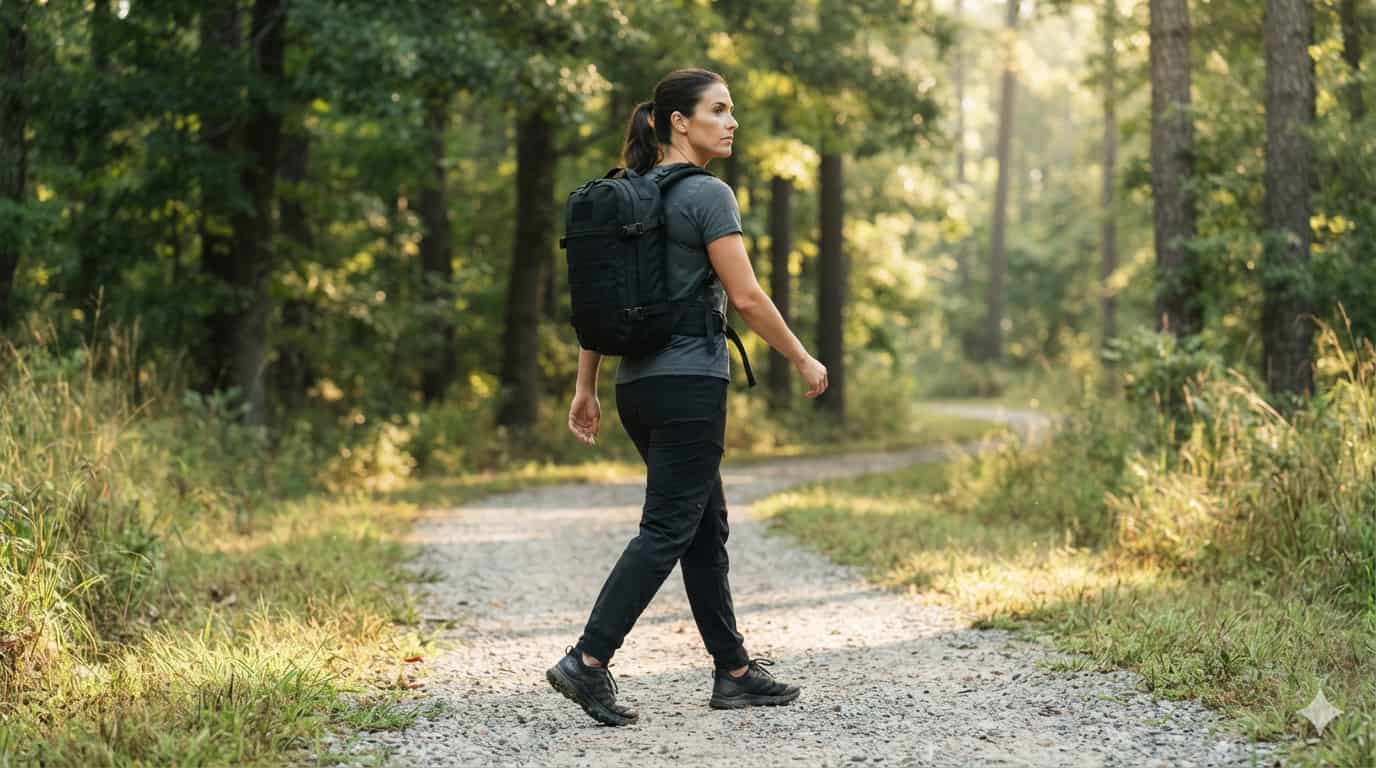
Starting a structured rucking workout plan for beginners is one of the most effective ways to build unbreakable functional stamina, improve posture, and burn massive calories without the joint-pounding impact of running. Originating in military special forces training, “rucking” is simply the act of walking or hiking with a weighted backpack.
While military special operations forces have utilized weighted marches for decades, executing an approachable rucking workout plan for beginners allows everyday fitness enthusiasts to develop real-world physical resilience. Running on hard asphalt places three times your body weight in ground-reaction force across your knees and ankles with every single stride. Rucking, by contrast, keeps one foot planted firmly on the ground at all times, drastically reducing joint compression while delivering an intense cardiovascular and muscular workout.
Whether you want to lean down, correct desk-related postural slumping, or prepare your body to carry heavy emergency gear across rugged terrain, here are 7 proven steps to master rucking safely and effectively.
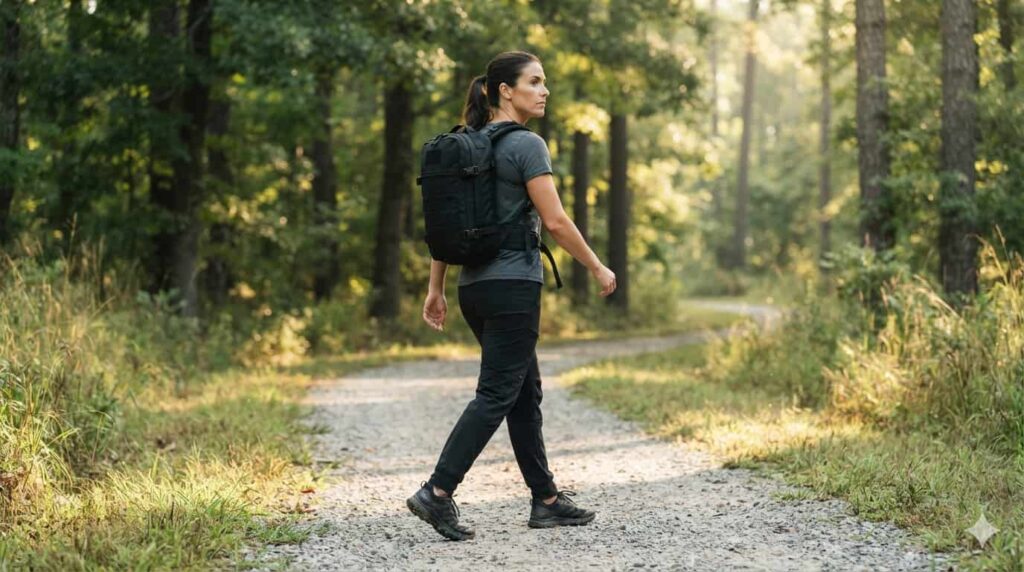
Why Choose a Rucking Workout Plan for Beginners?
Many active adults seek out a rucking workout plan for beginners because carrying a weighted backpack burns up to three times more calories than regular walking while actively decompressing sedentary posture.
When you place a comfortable, balanced load on your back, your musculoskeletal system responds with three unique physical benefits:
- Active Posture Correction: The gravitational pull of the backpack naturally pulls your shoulders back and down, reversing the chronic forward-head slump caused by computer screens and smartphones.
- Zone 2 Cardiovascular Endurance: Rucking elevates your heart rate directly into the fat-burning aerobic zone (110–135 BPM) at a comfortable walking pace, sparing you from breathless exhaustion.
- Posterior Chain and Core Hypertrophy: Every step forces your glutes, hamstrings, calves, and spinal erectors to engage as dynamic shock absorbers, building a rugged, bulletproof back.
Adopting an intelligent rucking workout plan for beginners turns an ordinary neighborhood stroll into a powerful functional conditioning session.
7 Proven Rucking Workout Plan for Beginners Steps for Functional Strength
1. The 10% Bodyweight Load Formula (Start Light)
The foundational rule in any sustainable rucking workout plan for beginners is never starting too heavy; loading your pack with exactly 10% of your body weight protects your spine. Eager beginners often load 30 or 40 pounds into a flimsy backpack on day one, leading to foot blisters, shoulder chafing, and lower back sprains.
- Load Calculation: If you weigh 150 lbs, start with 15 lbs. If you weigh 200 lbs, start with 20 lbs.
- Home Weight Sources: Thick hardcover books, clean bricks wrapped in duct tape, or sealed water bottles.
(Affiliate Tip: Ideal spot to link to standard cast-iron 10 lb and 20 lb rucking weight plates).
2. Pack Placement: High, Tight, and Centered
When setting up a rucking workout plan for beginners, securing the weight plate high and tight between your shoulder blades prevents lower back hyperextension. If the weight sags down into the bottom of your backpack near your lumbar curve, it exerts severe leverage that drags your spine backward.
- Packing Strategy: Place a rolled towel or foam block at the bottom of your bag, then rest your weight plate on top so it sits directly between your shoulder blades.
- Straps Setup: Cinch the shoulder straps until the pack hugs your upper torso snugly, and buckle the sternum strap across your mid-chest to distribute the pressure.
(Affiliate Tip: Great place to recommend tactical daypacks with thick padded shoulder straps and sternum buckles).
3. The 2-Mile Conversational Baseline
Establishing a manageable distance anchor during your initial rucking workout plan for beginners trains tendon tolerance before escalating mileage. Connective tissues, foot ligaments, and spinal erectors adapt slower than heart and lungs, making progressive exposure vital.
- Target Distance: 1.5 to 2.0 miles (2.5 to 3.2 kilometers).
- Weekly Frequency: 1 to 2 times per week maximum.
- The Talk Test: You should be able to carry on a normal sentence without gasping for breath.
4. Cadence Over Speed (Never Run with a Ruck)
A primary technical cue in this rucking workout plan for beginners is maintaining a brisk 15-to-18-minute-per-mile pace without breaking into a shuffle or jog. Running with added weight on your back spikes spinal compressive forces dramatically, defeating the low-impact purpose of the sport.
- Proper Mechanics: Stand tall, lean forward slightly from your ankles (not your waist), and take short, quick strides.
- Foot Strike: Land gently on your heel or midfoot and roll smoothly to your big toe, letting your hips absorb the load.
Pairing outdoor weighted endurance with consistent achieving cardiorespiratory fitness keeps your aerobic engine versatile and resistant to fatigue under physical stress.
5. Terrain Progression: From Asphalt to Dirt Trails
Advancing your rucking workout plan for beginners from flat asphalt onto rolling dirt trails strengthens ankle ligaments and stabilizer muscles. Flat pavement offers predictable footing, but natural trails introduce micro-undulations, roots, and gentle hills that fire up your core stabilizers and calves.
- Weeks 1–2: Flat neighborhood sidewalks or local park tracks.
- Weeks 3–4: Packed dirt walking trails or mild grassy inclines.
6. Proper Footwear and Blister Prevention
Carrying an extra 20 pounds amplifies downward friction on your feet. For those pairing outdoor resilience with core recovery in home studios, balancing heavy rucks with foldable Pilates machines for home workouts builds deep pelvic stability and joint mobility.
- Socks: Wear anti-blister merino wool or synthetic moisture-wicking athletic socks; never wear thin 100% cotton socks.
- Footwear: Choose trail running shoes or supportive lightweight hiking boots with a firm, rigid midsole.
(Affiliate Tip: Recommend merino wool hiking socks and trail running shoes).
7. Post-Ruck Spinal Decompression and Recovery
Concluding your ruck with a two-minute passive dead hang from a pull-up bar or a gentle standing hamstring stretch restores intervertebral disc height. Taking your weighted pack off immediately feels like floating, but giving your traps and lumbar muscles three minutes of passive stretching resets posture.
Biomechanics: How a Rucking Workout Plan for Beginners Builds Posture and Bone Density
The biological advantage of committing to a rucking workout plan for beginners lies in Wolff’s Law, where axial skeletal loading stimulates osteoblasts to fortify bone mineral density.
| Metric | Normal Casual Walking | Running / Jogging | Rucking with 10% Bodyweight |
| Joint Impact Stress | Very Low | Very High (3x body weight) | Low to Moderate |
| Caloric Expenditure / Hr | ~200 – 250 kcal | ~550 – 700 kcal | ~450 – 600 kcal |
| Postural Muscle Recruitment | Minimal | Low (Often slouches) | Very High (Traps, Core, Glutes) |
| Equipment Cost | $0 | Running shoes ($120) | Regular backpack + weight |
| Risk of Overuse Injuries | Extremely Low | High (Shin splints, runner’s knee) | Very Low |
4-Week Progressive Rucking Schedule for Beginners
Committing to this progressive rucking workout plan for beginners two days per week yields dramatic improvements in upper back strength and cardiovascular work capacity.
- Week 1: 2 sessions per week | 1.5 miles | 10% of body weight (Flat terrain).
- Week 2: 2 sessions per week | 2.0 miles | 10% of body weight (Maintain pace).
- Week 3: 2 sessions per week | 2.5 miles | 12% of body weight (Add minor trail inclines).
- Week 4: 2 sessions per week | 3.0 miles | 15% of body weight (Brisk 16-min/mile pace).
Implementing this accessible rucking workout plan for beginners proves that real-world functional resilience requires nothing more than a backpack, a few weights, and a pair of sturdy shoes.
Connect With Us & Share Your Progress
For practical functional fitness routines, emergency health resilience guides, and outdoor wellness tips, join our growing digital community:
- Follow our visual outdoor fitness guides on FitKiter on Pinterest
- Join our community fitness discussions on FitKiter on Facebook