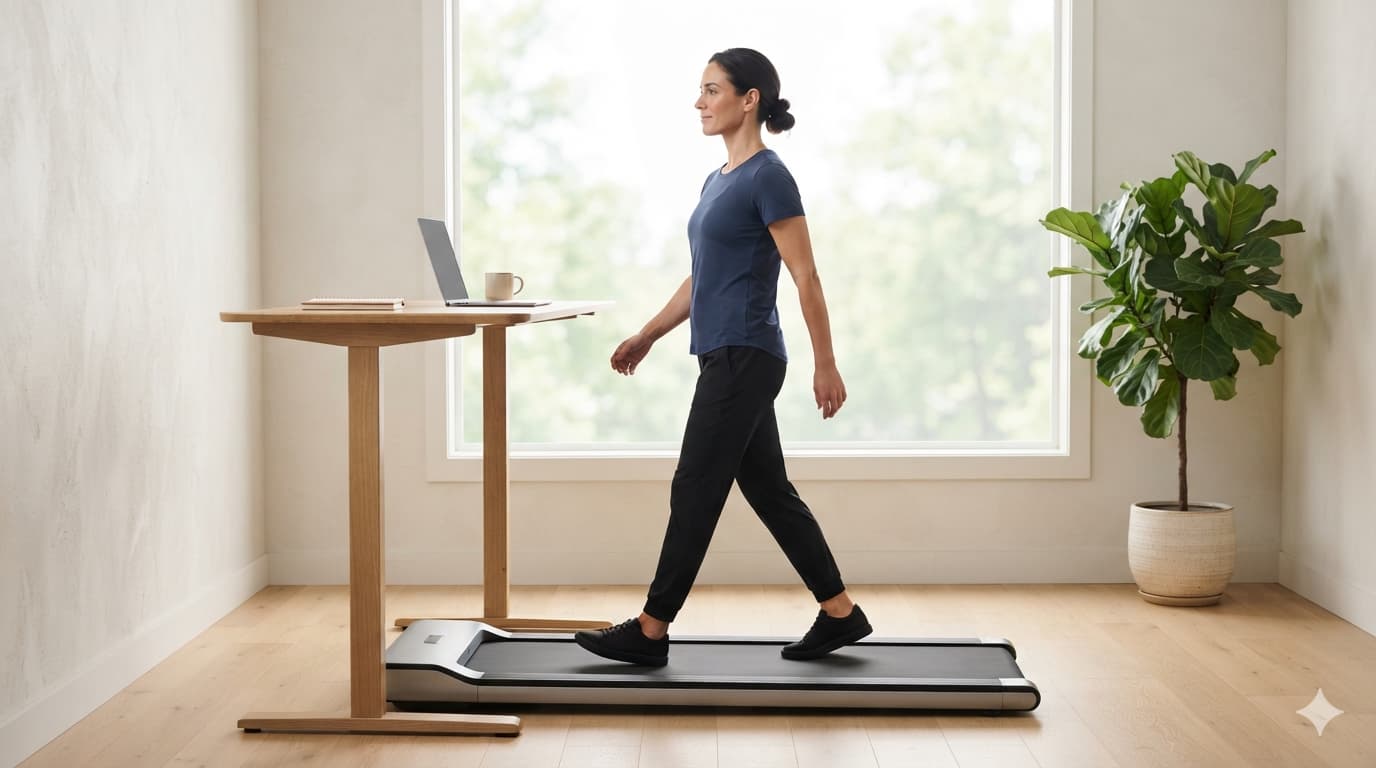
Starting a structured walking pad workout routine for beginners is one of the easiest ways to accelerate daily calorie expenditure without leaving your living room. Sitting behind a desk for eight consecutive hours halts blood flow, tightens hip flexors, and drops your metabolic rate to a virtual crawl.
While standard treadmills are intimidating and bulky, adopting an approachable walking pad workout routine for beginners allows you to collect 10,000 steps during work hours. These ultra-compact, flat treadmills slide effortlessly under standing desks or living room sofas, transforming idle sedentary time into productive, low-impact exercise.
However, mindlessly stepping on a flat moving belt without a strategy can quickly lead to foot fatigue, lower back stiffness, or boredom. By integrating progressive speed blocks, interval walks, and ergonomic posture checkpoints, you can safely melt excess fat while attending Zoom meetings or watching television.
Here are the 7 proven steps to structure your daily walking pad sessions for maximum fat burn.
Why Choose a Walking Pad Workout Routine for Beginners?
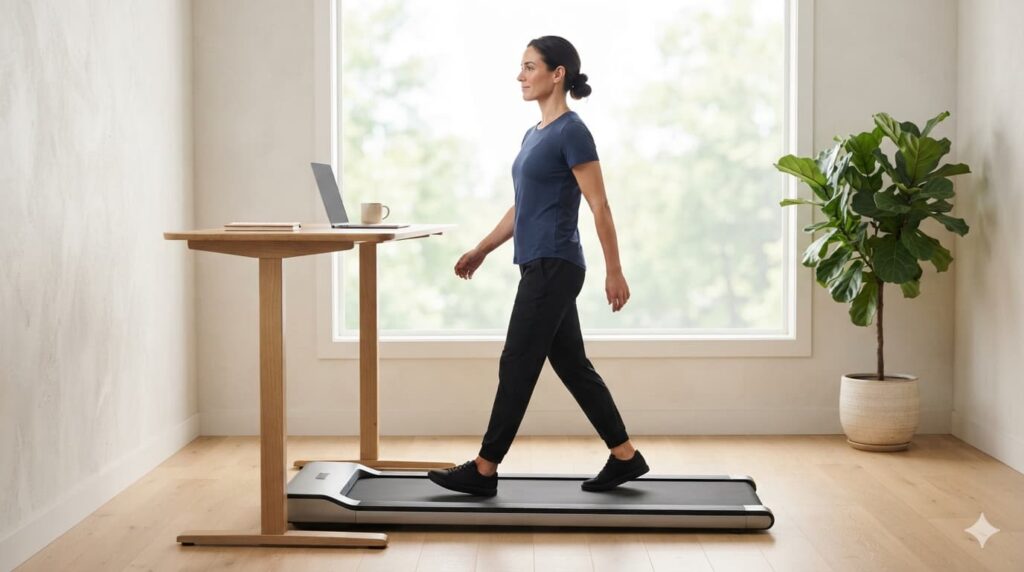
Many desk workers seek out a walking pad workout routine for beginners because sitting for eight consecutive hours drastically slows down metabolic rate.
Compared to intense gym classes or long outdoor runs, establishing a daily walking protocol yields distinct health advantages:
- Non-Exercise Activity Thermogenesis (NEAT): Walking pads dramatically elevate NEAT—the daily baseline calories burned outside of dedicated workouts. Boosting NEAT is the single biggest predictor of long-term fat loss maintenance.
- Zero Joint Impact: Unlike running on asphalt, modern walking pads feature shock-absorbing deck suspensions that spare your ankles, knees, and lumbar spine.
- No Downtime During Work: At modest speeds (1.2 to 2.0 mph), you can smoothly type emails, review spreadsheets, or participate in voice calls without losing your breath.
- All-Weather Consistency: Rain, snow, intense summer heat, or dark winter mornings can never derail your daily step goals again.
7 Proven Walking Pad Workout Routine for Beginners Steps for Fat Loss
1. The Low-Speed Typing Baseline (Zone 1 Stroll)
The first phase of any walking pad workout routine for beginners is establishing your base speed while typing or taking calls. Moving too fast right away makes your cursor wobble and disrupts keyboard accuracy.
- Target Speed: 1.2 to 1.8 mph (2.0 to 2.8 km/h)
- Ideal Duration: 30 to 45 minutes
How to Execute:
- Set up your standing desk so your elbows rest at a comfortable 90-degree typing angle.
- Step onto the belt, starting at the lowest speed to establish your balance without looking down at your feet.
- Keep your keyboard centered and focus on taking quiet, deliberate heel-to-toe strides.
- Reserve this zone for typing extensive emails, drafting documents, or attending webinars.
2. High-Paced Audio Intervals (Zone 2 Cardio)
Incorporating brisk power intervals turns an ordinary walking pad workout routine for beginners into an efficient fat-burning circuit. When you only need to listen to a podcast, phone meeting, or watch a video lecture, take your hands off the keyboard and pick up the cadence.
- Target Speed: 2.5 to 3.2 mph (4.0 to 5.1 km/h)
- Ideal Duration: 15 to 20 minutes
How to Execute:
- Step back slightly from your desk and allow your arms to swing naturally at your sides.
- Quicken your step cadence, maintaining an upright posture with your shoulders rolled back.
- Breathe in deeply through your nose and out through your mouth to keep your heart rate elevated in the optimal fat-oxidation zone.
3. Elevated Incline Simulation Blocks
If your device lacks incline, elevating the front feet slightly enhances your walking pad workout routine for beginners with extra hamstring engagement. Placing specialized rubber anti-vibration risers under the front wheels creates a gentle 2-to-3-degree slope that recruits your glutes and calves.
- Target Speed: 1.8 to 2.2 mph
- Ideal Duration: 15 minutes
How to Execute:
- Ensure your walking pad model permits slight elevation according to manufacturer guidelines.
- Lean forward slightly from your ankles (never bend at your waist) as you walk up the minor gradient.
- Drive through your midfoot and heels to fire up your gluteal muscles without overloading your lower back.
4. Post-Meal Glucose-Clearing Walks
Timing your walking pad workout routine for beginners right after lunch significantly blunts postprandial glucose spikes. Rather than slumping into an afternoon energy crash, taking 1,500 steps immediately after a meal shuttles carbs directly into muscle tissue.
- Target Speed: 1.5 to 2.0 mph
- Ideal Duration: 15 to 20 minutes post-meal
How to Execute:
- Step onto the walking pad within 15 minutes of finishing your lunch or hearty snack.
- Walk at a gentle, relaxing pace to stimulate peristalsis and muscle insulin receptors without causing stomach cramping.
- You will immediately notice the complete elimination of afternoon brain fog and midday sleepiness.
For those pairing daily cardio with strength training in small home studios, pairing this setup with foldable Pilates machines for home workouts builds a balanced, ultra-compact personal gym.
5. Deliberate Arm Swing Power Rounds
Adding deliberate arm drives into your walking pad workout routine for beginners elevates heart rate without requiring higher belt speeds. When you coordinate upper-body mechanics with lower-body strides, full-body oxygen consumption climbs by up to 15%.
- Target Speed: 2.2 to 2.8 mph
- Ideal Duration: 10 minutes
How to Execute:
- Step away from typing and bend your elbows at 90 degrees as if jogging.
- Drive your hands forward to chin level and pull your elbows back behind your ribs rhythmically.
- Keep your abdominal core gently braced to prevent excessive hip swaying.
6. Calorie-Torching Split Daily Sessions
Rather than trying to walk for two consecutive hours—which can strain your plantar fascia—splitting your walking pad workout routine for beginners into three 20-minute chunks yields superior fat burning.
Spreading movement throughout your day maintains high metabolic enzyme activity. Combining daily step volume with consistent achieving cardiorespiratory fitness keeps your resting heart rate low and stamina high.
7. Gentle Cooldown and Ankle Mobility Reset
Conclude your walking pad session with a slow two-minute deceleration followed by calf stretches off the edge of the belt. Stepping off a moving surface suddenly can cause brief equilibrium disorientation, so giving your inner ear 60 seconds to adapt is vital.
Biomechanics: How a Walking Pad Workout Routine for Beginners Boosts NEAT
The magic of a walking pad workout routine for beginners is that it leverages Non-Exercise Activity Thermogenesis without triggering joint fatigue. Unlike sprinting or heavy barbell squats, low-intensity steady walking does not elevate cortisol or spike ravenous hunger.
| Workout Phase | Belt Speed | Primary Activity | Caloric Burn / 30 Mins |
| Typing Baseline | 1.2 – 1.8 mph | Typing, Emailing, Writing | ~80 – 110 kcal |
| Audio Power Walk | 2.5 – 3.2 mph | Podcasts, Listening Calls | ~140 – 180 kcal |
| Gentle Incline Walk | 1.8 – 2.2 mph | Reading, Video Review | ~120 – 150 kcal |
| Post-Meal Stroll | 1.5 – 2.0 mph | Digestive Reset | ~90 – 115 kcal |
Safety and Footwear Essentials
Progressing your walking pad workout routine for beginners week over week ensures continuous stamina gains and steady fat reduction.
Follow these three basic safety principles:
- Always Wear Cushioned Running Shoes: Never walk barefoot or in socks on a moving pad; doing so places excessive repetitive strain on your plantar fascia.
- Keep Belt Centered and Lubricated: Apply silicone lubricant every 30 to 40 hours of use to prevent motor drag and belt slippage.
- Stay Hydrated: Keep a water bottle within reach on your desk to replace fluid lost during long, continuous walking hours.
Sticking to this realistic walking pad workout routine for beginners turns mundane workdays into active, health-boosting milestones.
Connect With Us & Share Your Progress
For practical home fitness setups, walking pad routines, and daily wellness habits, join our digital community:
- Follow our visual workout boards on FitKiter on Pinterest
- Join our health and wellness discussions on FitKiter on Facebook